
Alcohol-Related Liver Disease: Diagnosis and Management
Key points
- Spectrum: alcohol-related fatty liver (steatosis) → alcoholic hepatitis → cirrhosis, with the first two stages reversible on abstinence.
- Steatosis: develops in most heavy drinkers, is usually asymptomatic with mildly deranged LFTs, and resolves within weeks of stopping alcohol.
- Alcoholic hepatitis: acute inflammation presenting with jaundice, tender hepatomegaly and fever, which can be life-threatening even without established cirrhosis.
- Biochemistry: an AST:ALT ratio above 2 is characteristic, with a raised gamma-GT and macrocytosis (raised MCV).
- Severity scoring: the Maddrey discriminant function (using bilirubin and prothrombin time) and the Glasgow alcoholic hepatitis score guide steroid use.
- Steroids: prednisolone is considered in severe alcoholic hepatitis (Maddrey 32 or above), with response assessed by the Lille score at day 7.
- Withdrawal: manage with a chlordiazepoxide reducing regimen plus pabrinex to prevent Wernicke encephalopathy; screen for delirium tremens.
- Cornerstone of treatment: complete and sustained abstinence, which is the single most important determinant of survival at every disease stage.
Introduction
Alcohol-related liver disease (ARLD) describes a spectrum of liver injury caused by chronic excess alcohol consumption. It is the commonest cause of liver disease in the UK and accounts for the majority of liver-related deaths, with mortality having risen substantially over recent decades in contrast to most other major causes of death.1
The disease progresses through three overlapping stages, which may coexist in the same liver:
| Stage | Features | Reversibility |
|---|---|---|
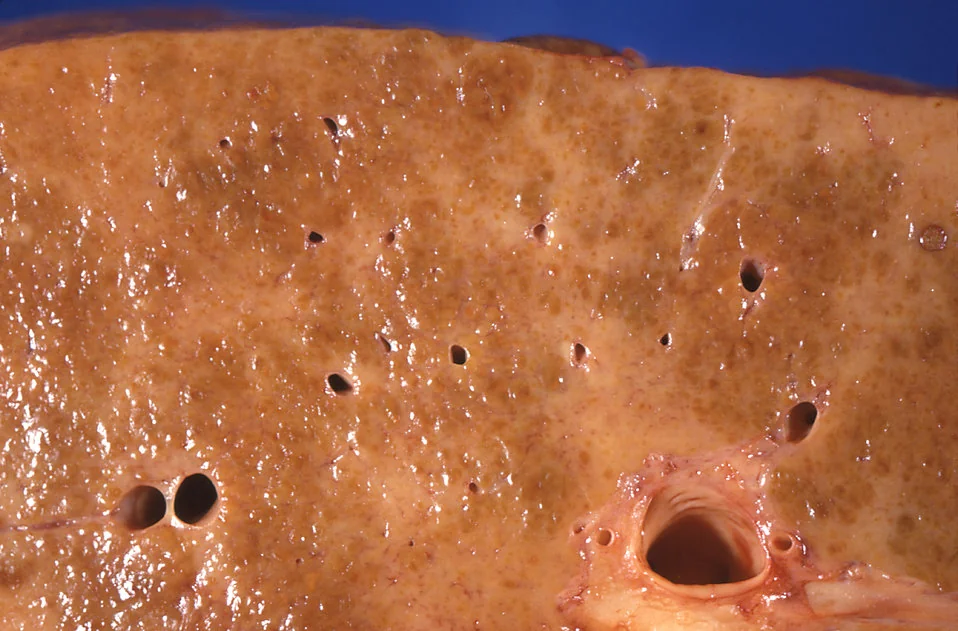
| Alcohol-related fatty liver (steatosis) | Fat accumulation in hepatocytes. Develops in 90% of heavy drinkers. Usually asymptomatic, mildly deranged LFTs | Fully reversible - resolves within 2-6 weeks of abstinence |
| Alcoholic hepatitis | Acute hepatic inflammation and necrosis. Jaundice, tender hepatomegaly, fever. Occurs in 10-35% of heavy drinkers | Potentially reversible with abstinence, but severe episodes carry high mortality |
| Cirrhosis | Irreversible fibrosis with regenerative nodules and loss of architecture. Develops in 8-20% of heavy drinkers | Irreversible, but abstinence markedly improves survival and may allow compensation |
Importantly, progression is not inevitable and not purely dose-dependent - only a minority of heavy drinkers develop cirrhosis, indicating that genetic factors (such as PNPLA3 polymorphisms), sex, obesity and coexisting liver disease all modify individual susceptibility.
Risk factors and pathophysiology
Risk factors
- Quantity and duration of alcohol intake - the dominant factor. UK guidance advises no more than 14 units per week for both sexes, spread over three or more days
- Female sex - women develop liver injury at lower intakes and shorter durations, owing to lower gastric alcohol dehydrogenase activity, lower body water and hormonal factors
- Pattern of drinking - daily drinking without alcohol-free days, and binge drinking, carry higher risk than the same weekly total spread out
- Obesity and metabolic syndrome, which act synergistically with alcohol
- Coexisting liver disease, particularly hepatitis C, which accelerates progression markedly
- Genetic factors, including PNPLA3 and TM6SF2 variants
- Smoking, malnutrition, and iron overload
Pathophysiology
Alcohol is metabolised to acetaldehyde by alcohol dehydrogenase and by the cytochrome P450 enzyme CYP2E1, which is induced by chronic drinking. Acetaldehyde is directly hepatotoxic, forming protein adducts and triggering an immune response. Metabolism also generates an excess of NADH, which shifts hepatic metabolism towards fatty acid synthesis and away from oxidation, producing steatosis.2
CYP2E1 activity generates reactive oxygen species causing oxidative stress and lipid peroxidation. Alcohol additionally increases gut permeability, allowing endotoxin to reach the liver via the portal vein and activate Kupffer cells, which release TNF-alpha and other cytokines. The resulting chronic inflammation activates hepatic stellate cells, which lay down collagen, producing progressive fibrosis and ultimately cirrhosis. Histologically, alcoholic hepatitis shows hepatocyte ballooning, neutrophil infiltration and Mallory-Denk bodies (eosinophilic cytoplasmic inclusions of damaged intermediate filaments).
Clinical features
By stage
- Steatosis: usually entirely asymptomatic; may cause mild right upper quadrant discomfort and smooth hepatomegaly, with incidental mildly abnormal liver enzymes
- Alcoholic hepatitis: jaundice, tender hepatomegaly, fever, anorexia, nausea, malaise and weight loss. Severe cases present with ascites, encephalopathy, coagulopathy and features of acute-on-chronic liver failure
- Cirrhosis: may be compensated and asymptomatic, or decompensated with jaundice, ascites, variceal bleeding and encephalopathy
Signs of chronic liver disease
- Hands: palmar erythema, Dupuytren contracture, leuconychia, clubbing, asterixis (a flapping tremor indicating encephalopathy)
- Face and skin: jaundice, spider naevi (more than five is abnormal, and they fill from the centre), parotid swelling, telangiectasia
- Chest and abdomen: gynaecomastia, loss of body hair, testicular atrophy (from impaired oestrogen metabolism), caput medusae, ascites with shifting dullness, splenomegaly
- Other: bruising and petechiae from coagulopathy, muscle wasting and sarcopenia, foetor hepaticus, peripheral oedema
Assessing alcohol intake
Take a careful, non-judgemental alcohol history quantifying units per week, the pattern of drinking, and features of dependence: compulsion to drink, loss of control, tolerance, withdrawal symptoms relieved by drinking, salience over other activities, and continued use despite harm. Validated screening tools such as AUDIT (or the shorter AUDIT-C) should be used, and the CAGE questionnaire is a quick bedside screen.3
Investigations
Blood tests
| Test | Typical finding |
|---|---|
| AST:ALT ratio | Greater than 2 is characteristic of alcohol-related injury (in MASLD the ratio is typically below 1). A ratio above 3 is highly suggestive |
| Gamma-GT | Markedly raised - a sensitive marker of alcohol use, though not specific |
| ALP | Mildly raised; a cholestatic picture may occur in severe alcoholic hepatitis |
| Bilirubin | Raised in alcoholic hepatitis and decompensated cirrhosis; a key prognostic marker |
| Full blood count | Macrocytosis (raised MCV) from direct marrow toxicity and folate deficiency; thrombocytopenia from hypersplenism and marrow suppression; anaemia; leucocytosis in alcoholic hepatitis |
| Albumin | Low, reflecting impaired synthetic function |
| Prothrombin time / INR | Prolonged - the most sensitive marker of synthetic function and a key prognostic indicator |
| Urea and electrolytes | Urea may be low from reduced synthesis; watch for hyponatraemia and acute kidney injury |
| Glucose | Hypoglycaemia can occur from impaired gluconeogenesis |
Excluding other causes and staging
A non-invasive liver screen should be performed in everyone, as coexisting liver disease is common: viral hepatitis serology (B and C), autoantibodies (ANA, SMA, AMA) and immunoglobulins, ferritin and transferrin saturation (haemochromatosis), caeruloplasmin in younger patients (Wilson disease), alpha-1 antitrypsin level, and coeliac serology.1
- Liver ultrasound: first-line imaging, showing a bright echogenic liver in steatosis, and in cirrhosis a nodular contour, splenomegaly and ascites. Also screens for hepatocellular carcinoma and assesses portal vein patency
- Transient elastography (FibroScan): NICE recommends offering this to assess for cirrhosis in people drinking over 50 units (men) or 35 units (women) per week for several months. Recent alcohol intake and acute hepatitis can falsely elevate readings
- Enhanced liver fibrosis (ELF) test and other serum fibrosis markers
- Liver biopsy: not routinely required, but used where the diagnosis is uncertain, coexisting disease is suspected, or to confirm alcoholic hepatitis before committing to corticosteroid treatment
- Upper GI endoscopy: to screen for oesophageal varices once cirrhosis is established
Severity scoring in alcoholic hepatitis
Several scores guide prognosis and the decision to give corticosteroids in alcoholic hepatitis.4
| Score | Components | Use |
|---|---|---|
| Maddrey discriminant function | Prothrombin time and bilirubin | A value of 32 or above indicates severe disease with high short-term mortality, and is the usual threshold for considering corticosteroids |
| Glasgow alcoholic hepatitis score (GAHS) | Age, white cell count, urea, prothrombin time ratio, bilirubin | A score of 9 or above identifies severe disease likely to benefit from steroids |
| Lille score | Change in bilirubin after 7 days of steroid treatment, plus age, albumin, creatinine, prothrombin time | Assesses response at day 7. A score above 0.45 indicates non-response, and steroids should be stopped |
| MELD score | Bilirubin, INR, creatinine (and sodium in MELD-Na) | General prognostic score in chronic liver disease, also used for transplant prioritisation |
| Child-Pugh score | Bilirubin, albumin, INR, ascites, encephalopathy | Grades severity of cirrhosis (A, B or C) and predicts survival |
Management
Abstinence
Complete and sustained abstinence is the single most important intervention at every stage, and is the strongest determinant of survival.1 Steatosis reverses entirely, alcoholic hepatitis can resolve, and even in established cirrhosis abstinence dramatically improves survival and may allow a decompensated liver to recompensate. Support should combine psychological intervention, specialist alcohol services, and consideration of relapse-prevention drugs such as acamprosate, naltrexone or disulfiram - though these require caution in advanced liver disease.
Managing alcohol withdrawal
Withdrawal typically begins 6-12 hours after the last drink, with seizures peaking at 36 hours and delirium tremens at 48-72 hours. Delirium tremens - coarse tremor, confusion, agitation, visual hallucinations (classically of insects or small animals), fever and marked autonomic instability - carries significant mortality and requires urgent treatment.5
- Chlordiazepoxide in a reducing regimen is first-line; lorazepam is preferred in significant liver impairment as it undergoes glucuronidation rather than hepatic oxidation
- Use a symptom-triggered approach guided by a withdrawal scale such as CIWA-Ar where possible
- Intravenous thiamine (Pabrinex) must be given before any glucose-containing fluids to prevent precipitating Wernicke encephalopathy - the triad of confusion, ataxia and ophthalmoplegia, which if untreated progresses to irreversible Korsakoff syndrome
- Monitor and correct electrolytes, particularly magnesium, potassium and phosphate, and watch for hypoglycaemia
- Treat delirium tremens with oral lorazepam first-line, or parenteral lorazepam or haloperidol if oral treatment is declined
Severe alcoholic hepatitis
- Corticosteroids: prednisolone 40 mg daily for 28 days is considered where the Maddrey discriminant function is 32 or above, after excluding active infection, GI bleeding and significant renal failure. Response is assessed with the Lille score at day 7, and steroids stopped if there is no response
- Nutritional support is critical - these patients are profoundly malnourished, and NICE recommends high-protein, high-calorie feeding, with nasogastric feeding if needed. Protein should not be restricted, even with encephalopathy
- Thiamine and vitamin supplementation
- Screen aggressively for infection, including ascitic fluid sampling for spontaneous bacterial peritonitis, and treat promptly
- Manage complications: ascites, encephalopathy, variceal bleeding and hepatorenal syndrome
- N-acetylcysteine may be used alongside steroids in some centres
Cirrhosis and transplantation
Established cirrhosis requires six-monthly ultrasound surveillance for hepatocellular carcinoma, endoscopic variceal screening, osteoporosis assessment, vaccination against hepatitis A and B, influenza and pneumococcus, and avoidance of hepatotoxic drugs and alcohol. Liver transplantation offers excellent outcomes but candidates must demonstrate sustained abstinence and engagement with alcohol services; most UK units require a period of abstinence, though early transplantation is increasingly considered in carefully selected patients with severe alcoholic hepatitis not responding to medical therapy.
Complications
- Portal hypertension with oesophageal and gastric varices and variceal haemorrhage
- Ascites and spontaneous bacterial peritonitis
- Hepatic encephalopathy
- Hepatorenal syndrome and acute kidney injury
- Hepatocellular carcinoma - hence surveillance in cirrhosis
- Coagulopathy and bleeding
- Acute-on-chronic liver failure and multi-organ failure
- Wernicke encephalopathy and Korsakoff syndrome from thiamine deficiency
- Delirium tremens and withdrawal seizures
- Extrahepatic alcohol-related harm: pancreatitis, cardiomyopathy, peripheral neuropathy, and cancers of the oropharynx, oesophagus, liver, breast and bowel
Red flags
Prognosis
Prognosis is determined overwhelmingly by disease stage and by whether the patient achieves abstinence.1 Simple steatosis resolves completely within weeks of stopping alcohol and carries an excellent outlook, but continued drinking leads a substantial minority on to fibrosis and cirrhosis.
Severe alcoholic hepatitis carries a short-term mortality of around 30-50% at one month, and steroid non-responders identified by the Lille score fare particularly badly. In cirrhosis, the contrast between abstinence and continued drinking is stark: five-year survival is roughly 90% in compensated cirrhosis with abstinence, falling to around 30-50% in those who continue to drink, and around 30% in decompensated disease. This gulf is the central message to convey to patients - the liver disease itself is often less determinative of outcome than whether the drinking stops.
References
- NICE CG100. Alcohol-use disorders: diagnosis and management of physical complications. 2010 (updated 2017). Available here
- European Association for the Study of the Liver. EASL Clinical Practice Guidelines: management of alcohol-related liver disease. J Hepatol. 2018. Available here
- NICE PH24. Alcohol-use disorders: prevention. 2010. Available here
- Thursz MR et al. Prednisolone or pentoxifylline for alcoholic hepatitis (STOPAH trial). N Engl J Med. 2015. Available here
- NICE CG115. Alcohol-use disorders: diagnosis, assessment and management of harmful drinking and alcohol dependence. 2011. Available here
- CDC/Dr Edwin P. Ewing, CC0, via Wikimedia Commons. Available here
- NHS. Alcohol-related liver disease. 2022. Available here
This article is written for revision and education. It is not clinical guidance and must not be used to make decisions about the care of a patient. Always check current NICE guidance and local protocols.