
Postural (Orthostatic) Hypotension
Key points
- Definition: a sustained fall of 20 mmHg or more in systolic blood pressure, or 10 mmHg or more in diastolic, within 3 minutes of standing.
- Measurement: measure lying (after 5 minutes supine), then standing at 1 minute and 3 minutes. A single sitting-to-standing reading is not adequate.
- Commonest cause: medication. Antihypertensives, diuretics, alpha-blockers, nitrates, antidepressants, antipsychotics and dopaminergic drugs.
- Neurogenic clue: an absent or blunted compensatory rise in heart rate on standing suggests autonomic failure rather than volume depletion.
- Prevalence: affects around 20% of people over 65 and up to 50% of frail nursing home residents. It is a major and under-recognised cause of falls.
- First-line treatment: review and reduce the drugs causing it. Deprescribing achieves more than any drug that can be added.
- Non-drug measures: slow position changes, adequate fluid and salt, compression garments, head-up tilt of the bed at night, and physical counter-pressure manoeuvres.
- Drug treatment: fludrocortisone or midodrine where non-pharmacological measures fail, watching for supine hypertension, which is common and often overlooked.
Introduction
Postural or orthostatic hypotension is a sustained fall of 20 mmHg or more in systolic blood pressure, or 10 mmHg or more in diastolic blood pressure, within 3 minutes of standing.3 Where the patient has supine hypertension, a systolic fall of 30 mmHg is often used as the threshold, since the absolute drop scales with the starting pressure.
It is extremely common and substantially under-diagnosed, affecting around 20% of people over 65 and up to half of frail nursing home residents. It causes falls, fractures, hospital admissions and loss of independence, and it is associated with increased cardiovascular morbidity and mortality independently of the conditions that cause it.
It is also one of the most remediable contributors to falls in older people, because in the majority of cases the cause is a medication that can be reduced or stopped.1 This makes measuring lying and standing blood pressure one of the highest-value bedside tests in geriatric and general medicine - and one of the most frequently omitted.
The normal response to standing
On standing, gravity displaces around 500-1000 ml of blood into the veins of the legs and splanchnic circulation. Venous return falls, and with it stroke volume and blood pressure. Normally this is corrected within seconds:
- Baroreceptors in the carotid sinus and aortic arch detect the fall in pressure
- Sympathetic outflow increases and parasympathetic tone falls
- Heart rate rises by 10-20 beats per minute, and contractility increases
- Peripheral vasoconstriction raises systemic vascular resistance
- The renin-angiotensin-aldosterone system and vasopressin contribute over minutes
- The net result is that mean arterial pressure is maintained, or falls only transiently
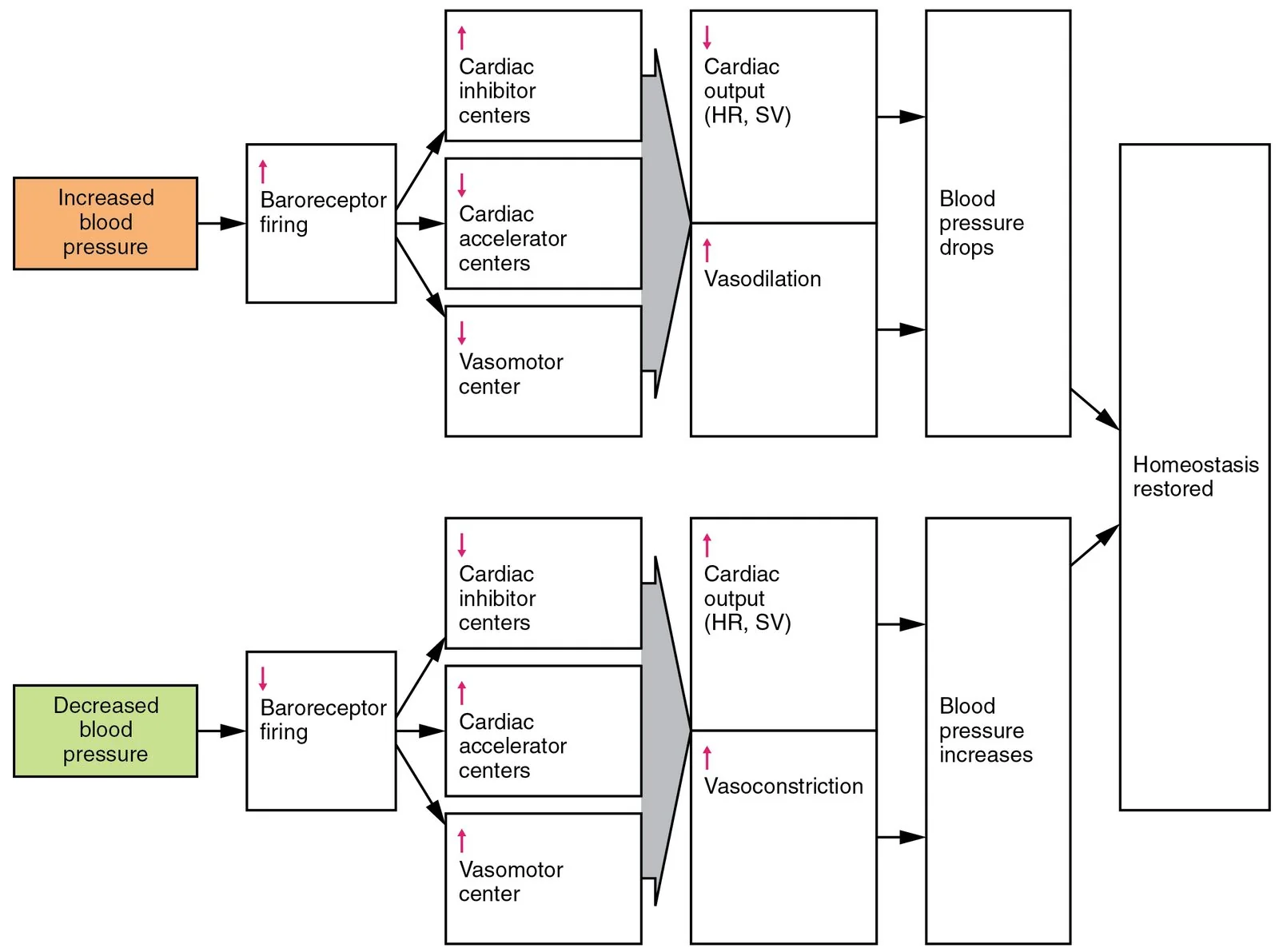
Postural hypotension results from failure at any point in this chain: inadequate volume to redistribute, impaired autonomic signalling, blunted cardiac response, or drug-induced blockade of vasoconstriction.
Aetiology
Drugs - the commonest cause
Always the first thing to review. Polypharmacy is frequently the whole explanation, and the effect is additive: several drugs each contributing modestly can together produce a symptomatic drop.
| Class | Examples | Mechanism |
|---|---|---|
| Antihypertensives | ACE inhibitors, ARBs, calcium channel blockers, beta-blockers | Reduced vascular tone and blunted heart rate response |
| Diuretics | Furosemide, thiazides, spironolactone | Volume depletion |
| Alpha-blockers | Doxazosin, tamsulosin | Directly block the alpha-1 mediated vasoconstriction that maintains standing blood pressure |
| Nitrates | GTN, isosorbide mononitrate | Venodilatation and reduced preload |
| Antidepressants | Tricyclics, trazodone, SSRIs, MAOIs | Alpha-blockade and autonomic effects |
| Antipsychotics | Quetiapine, risperidone, chlorpromazine, clozapine | Alpha-blockade |
| Dopaminergic drugs | Levodopa, dopamine agonists | Peripheral vasodilatation, compounding the autonomic failure of Parkinson's disease itself |
| Other | Opioids, benzodiazepines, alcohol, sildenafil, anticholinergics | Various |
Volume depletion
- Dehydration - poor oral intake, particularly common in frail and cognitively impaired patients
- Haemorrhage - including occult gastrointestinal bleeding; postural hypotension may be the only sign
- Vomiting, diarrhoea and burns
- Over-diuresis
- Adrenal insufficiency - postural hypotension with hyponatraemia, hyperkalaemia, fatigue and pigmentation
- Diabetes insipidus and osmotic diuresis in hyperglycaemia
Autonomic failure (neurogenic)
- Primary autonomic failure - Parkinson's disease, multiple system atrophy (where severe early autonomic failure is a defining feature), Lewy body dementia, and pure autonomic failure5
- Diabetic autonomic neuropathy - typically in long-standing diabetes, often with other autonomic features such as gastroparesis, erectile dysfunction and a resting tachycardia
- Amyloidosis - both AL and hereditary transthyretin amyloidosis
- Vitamin B12 deficiency
- Chronic kidney disease and uraemia
- Guillain-Barre syndrome and other neuropathies
- Spinal cord injury
- Paraneoplastic autonomic neuropathy
- Alcohol-related and HIV-related neuropathy
Cardiac and other causes
- Severe aortic stenosis and other outflow obstruction
- Heart failure with a fixed low cardiac output
- Bradyarrhythmia preventing a compensatory rise in rate
- Constrictive pericarditis and tamponade
- Prolonged bed rest and deconditioning - a rapidly reversible cause worth remembering in inpatients
- Age itself - baroreceptor sensitivity, ventricular compliance and renal sodium conservation all decline with age
- Postprandial hypotension - a related and distinct entity in which blood pressure falls within 1-2 hours of a meal, from splanchnic blood pooling. Common in older people and often responsible for post-lunch falls.
Clinical features
Symptoms
Classically the symptoms occur on standing and resolve on sitting or lying down, and are worse in the morning, after meals, in hot weather, after exertion and after alcohol.
- Light-headedness and dizziness on standing - the classic symptom
- Visual disturbance - greying, blurring or tunnel vision
- Syncope and presyncope
- Falls - and importantly, falls without any reported dizziness are common in older people, so postural hypotension must be sought actively rather than waiting for the symptom to be volunteered
- Generalised weakness and fatigue
- Coat-hanger pain - aching in the neck and shoulders on standing, caused by ischaemia of the postural muscles. It is a relatively specific symptom of neurogenic orthostatic hypotension and is easily missed unless asked about directly.
- Cognitive slowing and difficulty concentrating when upright
- Breathlessness on standing - from ventilation-perfusion mismatch at the lung apices
- Asymptomatic - a significant proportion of measurable postural drops cause no symptoms at all
Features suggesting autonomic failure
- Absent compensatory tachycardia - the most useful single sign. In volume depletion the heart rate rises appropriately; in autonomic failure it does not.
- Supine hypertension - paradoxically common in autonomic failure, and it complicates treatment considerably
- Erectile dysfunction - often an early feature in men
- Bladder and bowel dysfunction - urinary retention, incontinence, constipation
- Anhidrosis or abnormal sweating patterns
- Gastroparesis - early satiety, bloating, vomiting undigested food
- Fixed heart rate with no respiratory sinus arrhythmia
Measurement and investigations
Investigations
- FBC - anaemia and occult blood loss
- U&Es - dehydration, renal function, and hyponatraemia with hyperkalaemia suggesting adrenal insufficiency
- Glucose and HbA1c - diabetes and diabetic autonomic neuropathy
- Vitamin B12 and folate
- Bone profile and calcium
- Thyroid function
- Short Synacthen test - where adrenal insufficiency is suspected
- 12-lead ECG - arrhythmia, ischaemia, conduction disease and evidence of amyloid (low voltages with a pseudo-infarct pattern)
- Echocardiogram - where aortic stenosis, heart failure or cardiac amyloidosis is suspected
- Serum and urine electrophoresis and free light chains - if amyloidosis is considered
- 24-hour ambulatory blood pressure monitoring - documents the pattern through the day, identifies postprandial hypotension, and detects nocturnal supine hypertension
- Tilt table testing - where the diagnosis is uncertain, or where reflex syncope needs to be distinguished
- Formal autonomic function testing - heart rate variability with deep breathing, Valsalva ratio and sweat testing, in specialist centres
Management
The aims are to reduce symptoms and prevent falls, not to normalise the blood pressure reading. Treatment is best approached in a fixed order, because the first step is by far the most effective.
Step 1: review the medication
Step 2: non-pharmacological measures
- Stand up slowly and in stages - sit on the edge of the bed for a minute before standing, particularly on waking
- Physical counter-pressure manoeuvres - leg crossing with tensing, squatting, tensing the buttocks and abdominal muscles, and handgrip. These can raise blood pressure by 10-20 mmHg and can abort symptoms.
- Adequate fluid intake - 2-2.5 litres per day where not contraindicated by heart or renal failure
- Increased salt intake - up to 6-10 g per day if there is no heart failure, hypertension or renal impairment
- Rapid water ingestion - drinking 500 ml of cold water quickly raises blood pressure within 5-15 minutes and lasts around an hour. A useful measure before getting up or before activities known to provoke symptoms.
- Compression garments - waist-high compression stockings or an abdominal binder. Abdominal compression targets the splanchnic circulation, where most pooling occurs, and is often better tolerated than full-length stockings.
- Head-up tilt of the bed at night by 10-20 degrees - reduces nocturnal diuresis and supine hypertension, and improves morning blood pressure
- Small, frequent, low-carbohydrate meals - to reduce postprandial hypotension, and avoiding alcohol
- Avoid hot baths, saunas and hot weather, and avoid prolonged standing still
- Graded exercise - swimming and recumbent cycling are well tolerated and improve conditioning without provoking symptoms
- Falls prevention - a home hazard assessment, strength and balance training, footwear review, and a bone health assessment with treatment for osteoporosis where indicated
Step 3: drug treatment
Reserved for patients with persistent disabling symptoms despite the measures above.
| Drug | Mechanism | Cautions |
|---|---|---|
| Fludrocortisone | Mineralocorticoid - expands plasma volume and increases vascular sensitivity to noradrenaline | Supine hypertension, hypokalaemia, oedema, heart failure. Monitor weight, potassium and blood pressure. |
| Midodrine | Alpha-1 agonist causing peripheral vasoconstriction | Supine hypertension, scalp tingling, piloerection, urinary retention. Take doses at least 4 hours before lying down. |
| Droxidopa | Noradrenaline precursor | Not licensed in the UK; used in specialist practice in some countries |
| Pyridostigmine | Enhances ganglionic transmission; a modest effect but less supine hypertension | Cholinergic side effects - cramps, diarrhoea, nausea |
| Desmopressin | Reduces nocturnal polyuria in autonomic failure | Hyponatraemia - monitor sodium closely |
| Octreotide | Reduces splanchnic vasodilatation | Used specifically for postprandial hypotension |
Complications
- Falls and fractures - particularly neck of femur fracture, with its high associated mortality and loss of independence
- Head injury - including subdural haematoma, especially in anticoagulated patients
- Syncope and injury, including road traffic collisions
- Loss of confidence and fear of falling - leading to reduced activity, deconditioning, social isolation and a self-reinforcing cycle
- Loss of independence and admission to residential care
- Cognitive impairment - postural hypotension is independently associated with cognitive decline and dementia, likely through repeated cerebral hypoperfusion
- Increased cardiovascular morbidity and mortality, including stroke and ischaemic heart disease
- Supine hypertension and its consequences - left ventricular hypertrophy, renal impairment and haemorrhagic stroke
- Adverse effects of treatment - fluid overload with fludrocortisone, urinary retention with midodrine
Red flags
Prognosis
Prognosis depends almost entirely on the cause. Drug-induced and volume-related postural hypotension resolves completely with medication review and rehydration, and this accounts for the majority of cases seen in general practice and on medical wards. Recognising it therefore offers a rare combination of a simple intervention and a substantial benefit.
Neurogenic orthostatic hypotension carries a poorer outlook, reflecting the underlying neurodegenerative disease. It is progressive in Parkinson's disease and, particularly, in multiple system atrophy, where severe autonomic failure appearing early is a defining feature and a marker of a more aggressive course. Treatment in this group is symptomatic and increasingly difficult as the disease advances.
Independently of cause, postural hypotension is associated with increased all-cause and cardiovascular mortality, with a higher incidence of stroke, coronary events and heart failure, and with an increased risk of dementia. Part of this reflects the comorbidity of the patients affected, but the association persists after adjustment, suggesting that repeated cerebral hypoperfusion itself contributes.
The practical message is that measuring lying and standing blood pressure - a test taking under five minutes and requiring no equipment beyond a sphygmomanometer - identifies a highly treatable contributor to falls, fractures and loss of independence in a large proportion of older patients. It should be part of the routine assessment of anyone presenting with a fall, dizziness or unexplained collapse, and of anyone starting or escalating antihypertensive therapy.
References
- NICE CG161. Falls in older people: assessing risk and prevention. 2013, updated 2019. Available here
- NICE NG136. Hypertension in adults: diagnosis and management. 2019, updated 2023. Available here
- Brignole M, Moya A, de Lange FJ et al. 2018 ESC Guidelines for the diagnosis and management of syncope. European Heart Journal. 2018. Available here
- NICE CG109. Transient loss of consciousness (blackouts) in over 16s. 2010, updated 2023. Available here
- NICE NG71. Parkinson's disease in adults. 2017. Available here
- BNF. Midodrine hydrochloride - indications and cautions. Available here
- BNF. Fludrocortisone acetate - indications and cautions. Available here
- PoTS UK. Information for healthcare professionals. Available here
This article is written for revision and education. It is not clinical guidance and must not be used to make decisions about the care of a patient. Always check current NICE guidance and local protocols.