
Urinary Retention and Obstructive Uropathy
Key points
- Urinary retention: inability to pass urine despite a full bladder. Acute retention is painful; chronic retention is characteristically painless, which is why it presents late.
- Obstructive uropathy: structural or functional obstruction to urine flow causing renal impairment. It is one of the few genuinely reversible causes of acute kidney injury.
- Commonest cause: benign prostatic hyperplasia in men. In women retention is much less common and should prompt a search for a pelvic mass, prolapse or neurological cause.
- Precipitants: constipation, urinary tract infection, postoperative state, alcohol and drugs - especially anticholinergics, opioids, alpha-agonists and tricyclic antidepressants.
- Diagnosis: clinical, confirmed by a bladder scan. Acute retention typically holds 500-1000 mL; chronic retention often exceeds 1 litre with a palpable but painless bladder.
- Immediate management: urethral catheterisation - both diagnostic and therapeutic. Measure the residual volume drained, as it determines what happens next.
- The dangerous variant: high-pressure chronic retention - a large residual with bilateral hydronephrosis and renal impairment. The catheter stays in, and these patients are admitted.
- After decompression: watch for post-obstructive diuresis and decompression haematuria; monitor urine output and U&Es closely.
Introduction
Urinary retention is the inability to voluntarily pass urine despite a full bladder. Obstructive uropathy is the broader term for impairment of renal function resulting from obstruction anywhere in the urinary tract, and is important because it is one of the few fully reversible causes of acute kidney injury - a catheter can return a profoundly uraemic patient to near-normal renal function within days.1
Retention is common, and overwhelmingly a condition of older men: the lifetime risk for a man in his 70s is substantial, driven by benign prostatic hyperplasia. It is much less common in women, and when it occurs there the threshold for looking for a pelvic mass, significant prolapse or a neurological cause should be low.
Causes
It is worth being able to classify causes into obstructive, neurological and pharmacological, because the history usually points to one of these groups.
Obstructive causes
- Benign prostatic hyperplasia - by far the commonest cause in men
- Prostate cancer
- Urethral stricture - after instrumentation, trauma, catheterisation or infection
- Meatal stenosis, phimosis or paraphimosis
- Urinary calculi impacted in the bladder neck or urethra; blood clot retention after haematuria
- Constipation and faecal impaction - a very common and easily reversible precipitant, particularly in the elderly
- Pelvic masses - fibroids, ovarian cyst, gravid uterus (particularly a retroverted uterus at 12-14 weeks)
- Pelvic organ prolapse - cystocele or uterine prolapse in women
Neurological causes
- Cauda equina syndrome - the diagnosis that must never be missed; look for bilateral sciatica, saddle anaesthesia, reduced anal tone and bladder/bowel dysfunction
- Spinal cord compression or injury
- Multiple sclerosis, Parkinson's disease, diabetic autonomic neuropathy
- Stroke
- Post-operative, particularly after spinal or epidural anaesthesia and pelvic surgery
- Pudendal or pelvic nerve injury
Drugs
- Anticholinergics - oxybutynin, antihistamines, antipsychotics, tricyclic antidepressants (amitriptyline); they impair detrusor contraction
- Opioids
- Alpha-adrenergic agonists - including over-the-counter decongestants such as pseudoephedrine, which increase bladder neck tone
- Benzodiazepines and general anaesthetic agents
- Calcium channel blockers
- NSAIDs
- Alcohol - a very common precipitant of acute retention
Other precipitants
Urinary tract infection (causing local oedema and pain), postoperative pain and immobility, and constipation frequently tip a man with pre-existing prostatic obstruction into acute retention. These are worth identifying because treating them may allow a successful trial without catheter.
Clinical features
Acute retention
- Sudden inability to pass urine, with severe suprapubic pain and distress
- Strong, unrelieved urge to void
- Tender, palpable, dull-to-percussion suprapubic mass - the distended bladder
- Agitation and restlessness, sometimes presenting as delirium in frail older patients
Chronic retention
- Painless - the crucial distinguishing feature
- Palpable, non-tender bladder, sometimes reaching the umbilicus
- Overflow incontinence - continuous dribbling, and classically nocturnal enuresis (bedwetting) in an older man, which is a red flag for chronic retention
- Long-standing lower urinary tract symptoms - hesitancy, poor stream, terminal dribbling, sensation of incomplete emptying, frequency and nocturia
- Recurrent urinary tract infections from stasis
- Features of uraemia - fatigue, nausea, anorexia, pruritus, confusion - where renal function has been affected
| Feature | Acute retention | Low-pressure chronic | High-pressure chronic |
|---|---|---|---|
| Pain | Severe suprapubic pain | Painless | Painless |
| Onset | Sudden, over hours | Gradual, over months | Gradual, over months |
| Typical volume drained | 500-1000 mL | Often over 1 litre | Often 1-2 litres or more |
| Renal function | Usually normal | Normal | Impaired - raised creatinine |
| Hydronephrosis | Absent | Absent | Bilateral hydronephrosis |
| Overflow incontinence / nocturnal enuresis | No | Common | Common |
| Disposal | Catheter, treat precipitant, TWOC in a few days | Often outpatient management | Admit, catheter stays in, monitor for post-obstructive diuresis |
Examination
- Abdominal examination - palpate and percuss for a distended bladder
- Digital rectal examination - prostate size, symmetry and consistency (hard, craggy or nodular suggests malignancy); also assesses faecal loading and, critically, anal tone
- External genitalia - phimosis, paraphimosis, meatal stenosis
- Neurological examination including perineal sensation and lower limb power and reflexes - to exclude cauda equina syndrome; this must be done, not assumed
- Pelvic examination in women - for masses and prolapse
Investigations
- Bladder scan (ultrasound) - confirms the diagnosis and quantifies the retained volume; quick and non-invasive
- Volume drained on catheterisation - the most important single number. Under 800 mL suggests acute retention; over 800 mL to 1 litre suggests a chronic element. It determines admission, catheter management and follow-up
- U&Es and creatinine - to identify obstructive AKI; a raised creatinine changes management fundamentally
- Urine dipstick and culture - looking for infection as a precipitant (send after catheterisation if the patient cannot void)
- FBC and CRP - infection
- Renal tract ultrasound - to look for hydronephrosis; indicated in all patients with renal impairment or a large residual volume, as it identifies high-pressure chronic retention
- PSA - may be indicated to investigate prostate cancer, but interpret with great caution: retention, catheterisation, infection and digital rectal examination all raise it. Ideally defer measurement for several weeks
- Blood glucose / HbA1c - diabetes as a cause of autonomic neuropathy
- Urgent MRI of the whole spine - if there is any suspicion of cauda equina syndrome; this is an emergency investigation and should not wait
- Urodynamic studies and flow rate - in the elective setting to characterise bladder function before surgery
Management
Immediate management
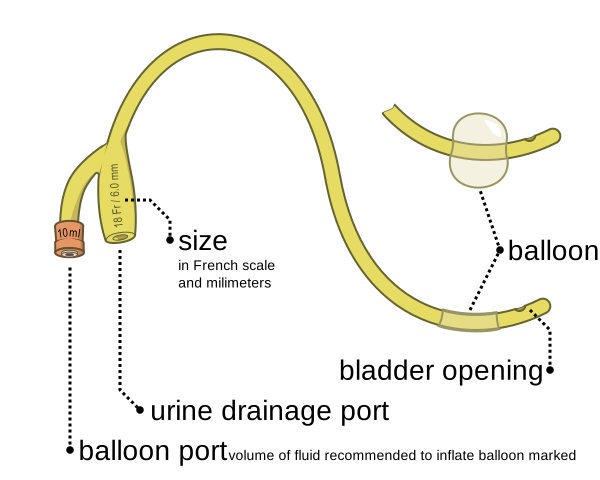
- Urethral catheterisation - both diagnostic and therapeutic, and gives immediate relief of pain. Use aseptic technique and adequate local anaesthetic lubricating gel
- Record the volume drained in the first 15 minutes and the total volume - this figure determines subsequent management
- Suprapubic catheterisation if urethral catheterisation fails or is contraindicated (e.g. suspected urethral injury, significant stricture) - performed by urology, with ultrasound guidance
- Identify and treat precipitants - treat infection, relieve constipation, review and stop culprit drugs, provide analgesia
- Check U&Es and arrange renal tract ultrasound if the volume is large or renal function is impaired
- Admit if there is renal impairment, high-pressure chronic retention, sepsis, or the patient cannot manage at home
Ongoing management in men
- Start an alpha-blocker (e.g. tamsulosin) at the time of catheterisation - it significantly increases the chance of a successful trial without catheter (TWOC), and should be started at least 24-48 hours before the TWOC is attempted
- Trial without catheter - usually after a few days for uncomplicated acute retention. Success is more likely with smaller drained volumes, a reversible precipitant and alpha-blocker cover
- Add a 5-alpha reductase inhibitor (finasteride) where the prostate is significantly enlarged - it reduces prostate volume over months and lowers the long-term risk of retention and surgery
- Long-term catheter (urethral or suprapubic) or intermittent self-catheterisation where TWOC fails and surgery is not appropriate or is awaited
- Surgery - transurethral resection of the prostate (TURP) - for recurrent retention, failed TWOC, high-pressure chronic retention, recurrent infection, stones or renal impairment
Managing the underlying cause
Beyond relieving the obstruction, treatment is directed at the cause: TURP or medical therapy for BPH, urethroplasty or dilatation for stricture, oncological treatment for prostate or pelvic malignancy, surgical decompression for cauda equina syndrome, intermittent self-catheterisation for a neurogenic bladder, and simple measures such as laxatives for constipation or rationalising anticholinergic and opioid prescribing.
Complications
- Acute kidney injury and obstructive uropathy - usually reversible if relieved promptly
- Chronic kidney disease and end-stage renal failure - from prolonged high-pressure retention
- Hydronephrosis and bilateral renal damage
- Urinary tract infection and urosepsis - stasis and catheterisation both predispose
- Post-obstructive diuresis with dehydration and electrolyte disturbance
- Decompression haematuria
- Bladder calculi - from chronic stasis
- Detrusor failure - a chronically overstretched detrusor may never regain effective contraction, leaving the patient permanently catheter-dependent
- Overflow incontinence with skin breakdown and pressure damage
- Catheter-related problems - trauma, urethral stricture, false passage, encrustation, blockage and catheter-associated infection
- Bladder rupture - rare, but a risk with extreme distension and trauma
Red flags
Prognosis
Acute retention has a good immediate prognosis - catheterisation relieves symptoms within minutes, and renal function, if affected at all, generally recovers completely. Around half of men undergoing a trial without catheter with alpha-blocker cover will void successfully, and success is more likely where a clear reversible precipitant such as constipation, infection or a culprit drug has been identified and corrected.
Recurrence is common in men with underlying prostatic obstruction. A significant proportion will have a further episode within a year, and many ultimately require TURP. Starting an alpha-blocker at the index episode and adding a 5-alpha reductase inhibitor where the prostate is enlarged both reduce this risk substantially.
Chronic high-pressure retention carries the worst outlook. Renal function often improves markedly after decompression, but recovery may be incomplete where obstruction has been prolonged, and some patients are left with established chronic kidney disease. A chronically overstretched detrusor may also fail to regain effective contraction, leaving permanent catheter dependence or a need for intermittent self-catheterisation. This is why painless retention - which by its nature presents late - deserves more concern than the dramatic and painful acute presentation, and why nocturnal enuresis in an older man should always prompt a bladder scan.
References
- NICE NG97 / CG97. Lower urinary tract symptoms in men: management. 2010, updated 2015. Available here
- NICE Clinical Knowledge Summaries. Lower urinary tract symptoms in men. Available here
- NICE NG148. Acute kidney injury: prevention, detection and management. 2019. Available here
- European Association of Urology. Guidelines on Non-neurogenic Male LUTS. Available here
- NICE NG59. Low back pain and sciatica in over 16s (cauda equina red flags). 2016, updated 2020. Available here
- Olek Remesz (Orem), CC BY-SA 3.0, via Wikimedia Commons. Available here
This article is written for revision and education. It is not clinical guidance and must not be used to make decisions about the care of a patient. Always check current NICE guidance and local protocols.