
Gastro-oesophageal Reflux Disease: Diagnosis and Management
Key points
- GORD: reflux of gastric contents into the oesophagus causing troublesome symptoms (typically heartburn and regurgitation) or complications.
- Mechanism: an incompetent lower oesophageal sphincter, often with a hiatus hernia, allows acid and bile to reflux and damage the oesophageal mucosa.
- Presentation: retrosternal burning worse after meals, lying flat or bending, with acid regurgitation and waterbrash.
- Diagnosis: usually clinical. Endoscopy is reserved for red-flag features or persistent symptoms despite treatment.
- Management: lifestyle measures first, then a trial of a proton pump inhibitor; surgery (fundoplication) for refractory or complicated disease.
- Complications: oesophagitis, peptic stricture, Barrett's oesophagus and, rarely, oesophageal adenocarcinoma.
- Red flags: dysphagia, weight loss, GI bleeding or an upper abdominal mass need urgent two-week-wait referral for endoscopy.
- Prognosis: usually a chronic, relapsing condition that responds well to acid suppression, though most patients relapse on stopping treatment.
Introduction
Gastro-oesophageal reflux disease (GORD) is the reflux of stomach contents into the oesophagus causing troublesome symptoms, mucosal damage, or both.1 It is one of the commonest problems seen in primary care and general medicine.
Occasional reflux is physiological and experienced by most people. GORD is diagnosed when reflux is frequent enough, or severe enough, to affect quality of life or cause complications such as oesophagitis or stricture.2 Around 1 in 5 adults in the UK report at least weekly reflux symptoms.
Pathophysiology
The lower oesophageal sphincter (LOS) normally maintains a high-pressure zone that prevents retrograde flow of gastric contents. GORD develops when this barrier fails, most often due to transient lower oesophageal sphincter relaxations (TLOSRs), a persistently hypotensive sphincter, or anatomical disruption by a hiatus hernia.1
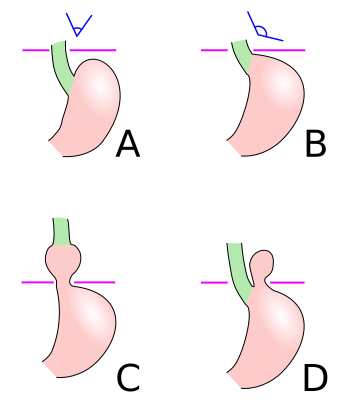
Hiatus hernia
A sliding hiatus hernia, where the gastro-oesophageal junction slides above the diaphragm, is present in most patients with severe GORD, though many people with a hiatus hernia have no reflux symptoms at all. A paraoesophageal (rolling) hernia is less common and carries a risk of strangulation.
Other contributing factors
Delayed gastric emptying, increased intra-abdominal pressure (obesity, pregnancy), and reduced oesophageal peristaltic clearance of refluxate all contribute. Prolonged acid exposure leads to oesophagitis, and in some patients, metaplastic change of the lower oesophageal epithelium (Barrett's oesophagus).3
Risk factors
Recognised risk factors include:1,2
- Obesity and raised intra-abdominal pressure
- Hiatus hernia
- Pregnancy
- Smoking and alcohol
- Caffeine, fatty or spicy food, and large meals
- Drugs that lower LOS tone: nitrates, calcium channel blockers, anticholinergics, tricyclic antidepressants
- Drugs that irritate the mucosa directly: NSAIDs, bisphosphonates
- Systemic sclerosis (severe reflux from oesophageal dysmotility)
Clinical features
The classic symptom is heartburn: a retrosternal burning sensation that typically worsens after meals, on bending or lying flat, and is often relieved by antacids. Acid regurgitation (the sensation of acid or food coming back up into the mouth or throat) and waterbrash (excess salivation) are also common.
Extra-oesophageal features occur when refluxate reaches the pharynx or airway, and can dominate the presentation:
- Chronic cough, particularly nocturnal
- Hoarseness and laryngitis
- Nocturnal choking or asthma-like wheeze
- Dental erosion
- Non-cardiac chest pain, which can mimic angina
Odynophagia (pain on swallowing) can occur with oesophagitis, but true dysphagia (difficulty swallowing) is a red-flag symptom and should not be attributed to uncomplicated GORD without investigation.4
Differential diagnosis
Consider alternative or coexisting diagnoses, particularly where symptoms are atypical or refractory to treatment:
- Peptic ulcer disease or gastritis: epigastric pain, often related to meals
- Acute coronary syndrome: cardiac chest pain can mimic reflux, and vice versa
- Eosinophilic oesophagitis: dysphagia and food bolus obstruction, often with an atopic history
- Achalasia: dysphagia to solids and liquids from the outset, with regurgitation of undigested food
- Oesophageal or gastric cancer: progressive dysphagia, weight loss, anorexia
- Biliary colic: right upper quadrant pain, often postprandial and related to fatty food
Investigations
GORD is usually diagnosed clinically from the history, and most patients do not need investigation before a treatment trial.2
Endoscopy
Upper GI endoscopy (OGD) is indicated for red-flag symptoms (see below), symptoms that persist despite an adequate trial of acid suppression, or new dyspepsia in a patient aged 55 or over. Endoscopy can show reflux oesophagitis, graded by the Los Angeles (LA) classification, and can identify complications such as stricture or Barrett's oesophagus. A normal endoscopy does not exclude GORD, since many patients have non-erosive reflux disease.1
| Grade | Endoscopic appearance |
|---|---|
| A | One or more mucosal breaks no longer than 5 mm, none extending between the tops of two mucosal folds |
| B | At least one mucosal break longer than 5 mm, none extending between the tops of two mucosal folds |
| C | Mucosal breaks extending between the tops of two or more mucosal folds, involving less than 75% of the circumference |
| D | Mucosal breaks involving at least 75% of the oesophageal circumference |
Further tests
24-hour oesophageal pH monitoring and oesophageal manometry are reserved for atypical or refractory symptoms, or before anti-reflux surgery, to confirm pathological acid exposure and exclude a motility disorder such as achalasia. Testing for Helicobacter pylori (stool antigen or urea breath test) is used to guide management of uninvestigated dyspepsia rather than to diagnose GORD itself.
Management
Management is stepwise, starting with lifestyle measures and escalating to pharmacological and, occasionally, surgical treatment.
Lifestyle measures
- Weight loss if overweight
- Smoking cessation and reduced alcohol intake
- Smaller, more frequent meals, avoiding food within 3 hours of bedtime
- Reducing caffeine, fatty and spicy food where these trigger symptoms
- Raising the head of the bed
- Reviewing and, where possible, stopping precipitant drugs (e.g. nitrates, calcium channel blockers, NSAIDs)
Pharmacological treatment
A full-dose proton pump inhibitor (PPI, e.g. omeprazole 20-40 mg once daily) for 4-8 weeks is first-line.2 Most patients respond well. Where symptoms relapse, the lowest effective dose is used long term or PPIs are taken on an as-needed basis.
An H2-receptor antagonist (e.g. famotidine) is an alternative for patients who cannot tolerate a PPI, or as step-down therapy. If H. pylori testing is positive in a patient with uninvestigated dyspepsia, eradication therapy is offered.5
Surgical management
Laparoscopic Nissen fundoplication (wrapping the gastric fundus around the lower oesophagus) is considered for patients with confirmed reflux who have an inadequate response to medical therapy, who cannot tolerate long-term PPIs, or who prefer a definitive procedure. It is effective but carries risks of dysphagia, bloating (gas-bloat syndrome) and inability to vomit.1
Complications
Chronic acid exposure can lead to several complications:
- Reflux oesophagitis: mucosal inflammation and erosions, graded endoscopically by the LA classification
- Peptic stricture: fibrous narrowing causing progressive dysphagia to solids
- Barrett's oesophagus: metaplastic columnar change of the distal oesophageal epithelium, a premalignant condition3
- Oesophageal adenocarcinoma: the long-term consequence of untreated Barrett's oesophagus in a minority of patients
- Chronic microaspiration causing cough or recurrent chest infections
- Dental erosion and anaemia from chronic occult blood loss
Red flags
Prognosis
GORD is typically a chronic, relapsing condition. Most patients gain good symptom control with lifestyle measures and PPI therapy, but symptoms commonly recur when treatment is stopped, and many patients need long-term maintenance therapy. A small proportion progress to Barrett's oesophagus, and an even smaller proportion of those go on to develop adenocarcinoma, which is why patients with Barrett's oesophagus enter an endoscopic surveillance programme.3
References
- NICE Clinical Knowledge Summaries (CKS). Gastro-oesophageal reflux disease. 2023. Available here
- NICE NG12. Dyspepsia and gastro-oesophageal reflux disease in adults: investigation and management. 2014 (updated 2019). Available here
- NICE Clinical Knowledge Summaries (CKS). Barrett's oesophagus. 2023. Available here
- NICE NG12. Suspected cancer: recognition and referral. 2015 (updated 2023). Available here
- NICE Clinical Knowledge Summaries (CKS). Helicobacter pylori infection. 2023. Available here
- Mysid, CC0, via Wikimedia Commons. Available here
- NHS. Heartburn and acid reflux. 2022. Available here
- BNF. Proton pump inhibitors. Available here
This article is written for revision and education. It is not clinical guidance and must not be used to make decisions about the care of a patient. Always check current NICE guidance and local protocols.