
Depression: Diagnosis and Management
Key points
- Depression: persistent low mood and/or loss of interest or pleasure (anhedonia), present most of the day nearly every day for at least 2 weeks, with associated cognitive and somatic symptoms.
- Core triad: low mood, anhedonia and low energy/fatigue - at least one of the first two must be present to make the diagnosis.
- Screening: the two Whooley questions in primary care, then PHQ-9 to quantify severity and track response to treatment.
- Classification: NICE now divides depression into less severe (roughly PHQ-9 under 16) and more severe, based on symptom burden and functional impairment, rather than mild/moderate/severe alone.
- Always screen for mania: before diagnosing depression or starting an antidepressant, ask about past hypomanic or manic episodes - missing bipolar disorder and starting an SSRI can precipitate mania.
- First-line treatment: a choice of psychological therapy and/or an SSRI, guided by severity, patient preference and past response, within a stepped-care model.
- Risk assessment: suicidal ideation, intent and plan must be asked about directly at every assessment - asking does not increase risk.
- Continuation: antidepressants are continued for at least 6 months after remission, or 2 years or longer after recurrent episodes, to reduce relapse.
Introduction
Depression is a mood disorder characterised by persistent low mood and/or anhedonia - loss of interest or pleasure in previously enjoyable activities - present for most of the day, nearly every day, for at least two weeks, together with a cluster of cognitive and somatic symptoms.1
It is one of the commonest conditions in medicine. Around 1 in 6 adults in England report symptoms of depression or anxiety in any given week, and depression is a leading cause of disability worldwide.2 It coexists with, and worsens the outcome of, almost every chronic physical illness, which is why screening for it belongs in general medical clerking, not just psychiatric assessment.
The word depression is used loosely in everyday speech for low mood, which is a normal and self-limiting response to adversity. The clinical diagnosis requires persistence, a minimum symptom count, and functional impairment - distinguishing the two, and distinguishing depression from grief and from bipolar disorder, is a recurring exam theme.
Aetiology
Depression is best understood through a biopsychosocial model: biological vulnerability, psychological factors and social circumstances interact, and no single mechanism accounts for every case.
Biological
- Genetics: heritability of around 30-40%, higher for recurrent and early-onset disease. Risk is polygenic rather than caused by a single gene.
- Monoamine hypothesis: reduced serotonergic and noradrenergic neurotransmission in key mood circuits. This underpins the mechanism of most antidepressants, though it is an incomplete explanation - drug effects on receptors are immediate, but clinical response takes weeks.
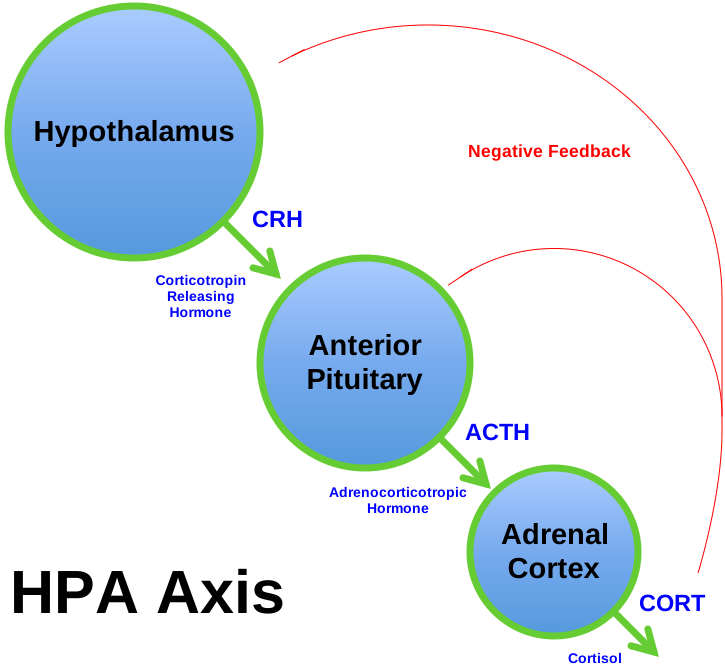
- HPA axis dysregulation: chronic stress raises cortisol, which impairs hippocampal neurogenesis and feedback regulation of the stress response.
- Neuroinflammation and physical illness: raised inflammatory markers are found in a subset of patients, which is one proposed link between chronic physical disease and depression.
- Neuroinflammation: raised inflammatory markers are seen in some patients, and depression is more common in inflammatory conditions such as rheumatoid arthritis.
- Physical illness and medication: post-stroke depression, post-myocardial infarction depression, and drug causes including corticosteroids, beta-blockers, isotretinoin and some antihypertensives.
Psychological
- Cognitive theory (Beck): a negative triad of automatic thoughts about the self, the world and the future, maintained by cognitive distortions such as catastrophising and overgeneralisation.
- Learned helplessness: repeated exposure to uncontrollable adverse events leads to a belief that effort cannot change outcomes.
- Personality: neuroticism and low self-esteem increase vulnerability.
Social
- Adverse life events - bereavement, relationship breakdown, redundancy - particularly as a trigger for a first episode
- Adverse childhood experiences, including abuse and neglect
- Social isolation and lack of a confiding relationship
- Socioeconomic deprivation and chronic financial stress
- Chronic physical illness and pain
Risk factors
- Female sex - roughly twice the incidence of men
- Previous episode of depression - the strongest predictor of a further episode
- Family history of depression or other mood disorder
- Chronic physical illness, particularly diabetes, cardiovascular disease, chronic pain and cancer
- Postnatal period
- Substance misuse, including alcohol
- Social adversity - unemployment, poverty, poor housing, caring responsibilities
- Older age combined with social isolation, bereavement and physical frailty
- Adolescent and young adult age combined with academic, social or family stress
Clinical features
ICD-11 requires the presence of a depressive episode: a cluster of affective, cognitive and neurovegetative symptoms present most of the day, nearly every day, for at least two weeks, representing a change from previous functioning.1
Core symptoms
- Persistent low mood - present for most of the day, most days, and not simply reactive to circumstance
- Anhedonia - markedly diminished interest or pleasure in activities that were previously enjoyed
- Reduced energy or increased fatiguability
At least one of low mood or anhedonia must be present. Diagnosis then requires several additional symptoms to reach the required total and duration.
Additional (cognitive and somatic) symptoms
- Reduced concentration and attention, or indecisiveness
- Reduced self-esteem and self-confidence
- Ideas of guilt and worthlessness, which may become delusional in severe episodes
- Bleak and pessimistic views of the future, and hopelessness
- Thoughts or acts of self-harm or suicide
- Disturbed sleep - classically early morning waking, though insomnia or hypersomnia both occur
- Diminished appetite with weight loss, though increased appetite and weight gain occur in atypical depression
- Psychomotor agitation or retardation, observable by others
- Diurnal variation in mood, classically worse in the morning
In severe depression, mood-congruent psychotic features can occur: nihilistic, guilty or poverty delusions, and derogatory or accusatory auditory hallucinations. Cotard syndrome, the delusional belief that one is dead or does not exist, is a rare but classic example.
Screening and severity tools
The two Whooley questions are a validated case-finding tool for primary care and general medical settings: 'During the last month, have you often been bothered by feeling down, depressed or hopeless?' and 'During the last month, have you often been bothered by having little interest or pleasure in doing things?' A positive answer to either warrants further assessment.
The PHQ-9 is then used to quantify severity and to monitor response to treatment over time, scoring nine symptom domains from 0 to 3 over the preceding two weeks.
| PHQ-9 score | Severity |
|---|---|
| 0-4 | None to minimal |
| 5-9 | Mild |
| 10-14 | Moderate |
| 15-19 | Moderately severe |
| 20-27 | Severe |
Mental state examination
| Domain | Typical findings in depression |
|---|---|
| Appearance and behaviour | Poor eye contact, neglected self-care, psychomotor retardation or agitation, tearfulness |
| Speech | Slow, quiet, monotonous, with long latency to respond |
| Mood and affect | Subjectively low; objectively flattened or blunted affect, congruent with mood |
| Thought form | Usually normal, though thinking may be slowed |
| Thought content | Hopelessness, worthlessness, guilt, ruminations, suicidal or self-harm ideation; mood-congruent delusions in severe episodes |
| Perception | Usually normal; derogatory auditory hallucinations or nihilistic delusions in psychotic depression |
| Cognition | Poor concentration and memory - can mimic dementia in older adults (depressive pseudodementia) |
| Insight | Usually retained, though severe hopelessness can distort a patient's view of their own prognosis |
Differential diagnosis
- Bipolar affective disorder: a depressive episode with a past history of mania or hypomania - always ask before treating
- Normal grief: low mood proportionate to a loss, without the pervasive worthlessness, guilt unrelated to the deceased, or psychomotor retardation typical of depression, though prolonged or complicated grief can merit treatment
- Adjustment disorder: emotional symptoms in response to an identifiable stressor, not meeting the full symptom count or duration for depression
- Dysthymia (persistent depressive disorder): milder, chronic low mood lasting 2 years or more, often with fewer somatic features
- Hypothyroidism: fatigue, low mood, weight gain and cognitive slowing - always check TFTs
- Anaemia and other causes of chronic fatigue
- Dementia: progressive cognitive decline without a clear affective trigger; distinguishing pseudodementia from true dementia can require formal cognitive testing and time
- Substance-induced mood disorder: alcohol and other depressants commonly cause or worsen depressive symptoms
- Medication-induced: corticosteroids, beta-blockers, isotretinoin, some hormonal contraceptives
- Chronic physical illness: Parkinson's disease, stroke, and malignancy (notably pancreatic cancer) can present with depression before other features emerge
Investigations
Depression is a clinical diagnosis made on history and mental state examination. Investigations are directed at excluding an organic cause and establishing a baseline before starting treatment, not at confirming the diagnosis itself.
- FBC - anaemia or evidence of chronic disease
- TFTs - hypothyroidism is a common and reversible mimic
- U&Es, calcium, glucose or HbA1c, LFTs - metabolic contributors and a baseline before medication
- B12 and folate - deficiency can present with depressive and cognitive symptoms
- Collateral history from family or carers, particularly regarding functional decline, self-neglect and risk
- Validated tools - PHQ-9 for severity and to track response; HAD scale where anxiety and depression coexist
Every assessment must include a structured risk assessment: current suicidal ideation, intent and plan; access to means; protective factors; and risk to any dependants, particularly children. This is covered in full in the article on self-harm and risk assessment.
Management
NICE guidance (NG222, 2022) organises treatment as a stepped-care model, with intensity matched to severity, and moves away from a single first-line drug towards a shared decision between psychological therapy, medication, or both, guided by patient preference and past response.4
Less severe depression
For a first presentation of less severe depression (broadly, a PHQ-9 under 16 with limited functional impairment), NICE recommends discussing options rather than defaulting to an antidepressant. Choices, in no fixed order of preference, include:
- Guided self-help based on CBT principles
- Group CBT or group behavioural activation
- Individual CBT or behavioural activation
- A structured group physical activity programme
- Group mindfulness and meditation
- Interpersonal psychotherapy (IPT)
- Counselling
- Short-term psychodynamic psychotherapy
An SSRI is not usually the first option offered for less severe depression, but is discussed and can be chosen if the patient prefers it, has responded well to medication previously, or has a history of moderate-to-severe depression.
More severe depression
For more severe depression, NICE recommends a combination of an antidepressant with individual high-intensity psychological therapy (CBT or IPT), or antidepressant alone, or high-intensity therapy alone, again by shared decision.
Antidepressant choice
An SSRI (for example sertraline or citalopram) is generally the first-choice drug class, balancing efficacy, tolerability and safety in overdose.5
| Class | Examples | Key points |
|---|---|---|
| SSRI | Sertraline, citalopram, fluoxetine | First-line; GI upset, sexual dysfunction, hyponatraemia especially in older adults; sertraline preferred post-MI |
| SNRI | Venlafaxine, duloxetine | Second-line; can raise blood pressure; more dangerous in overdose than SSRIs |
| Mirtazapine | Mirtazapine | Sedating and increases appetite - useful where insomnia or weight loss are prominent |
| TCA | Amitriptyline, lofepramine | Effective but anticholinergic side effects and cardiotoxic and dangerous in overdose |
| MAOI | Phenelzine | Rarely used; dietary tyramine restriction and multiple drug interactions |
Continuation and relapse prevention
- Continue an antidepressant for at least 6 months after remission of a first episode, to reduce the risk of relapse
- Continue for 2 years or longer after a recurrent episode, or where there are ongoing residual symptoms or risk factors for relapse
- Switch to an alternative antidepressant, or augment with lithium, an atypical antipsychotic, or a second antidepressant if the first is not effective at an adequate dose and duration
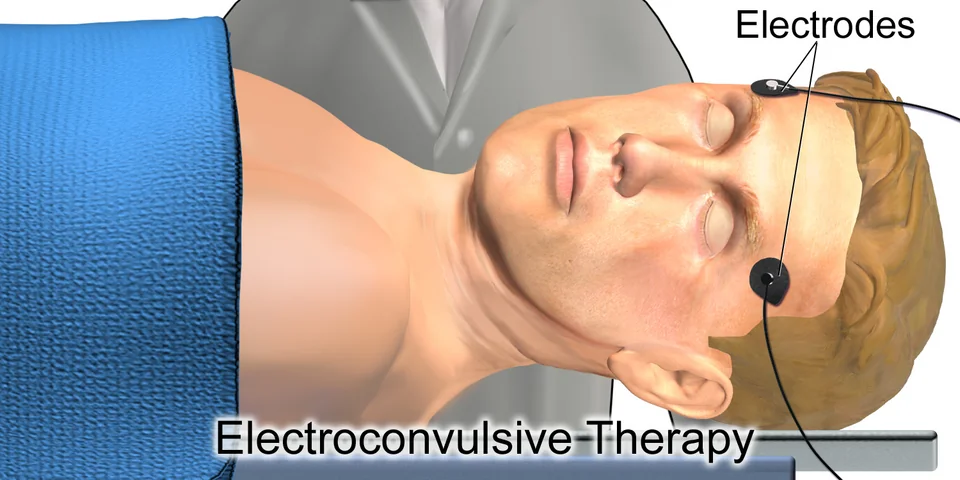
- Electroconvulsive therapy (ECT) for severe, treatment-resistant depression, life-threatening depression with high suicide risk or severe self-neglect, psychotic depression, or catatonia - it has the fastest and most reliable response rate of any treatment for severe depression
Complications
Suicide is the complication that matters most: depression is present in the majority of completed suicides. Self-harm, substance misuse, relationship and occupational breakdown, worsening of comorbid physical illness, and neglect of self-care and dependants are all common. Chronic or recurrent depression carries a substantial cumulative burden on quality of life and life expectancy, partly through increased cardiovascular risk.
Red flags
Prognosis
Most single episodes of depression resolve within 6 months with appropriate treatment, and the majority of patients respond to a first or second antidepressant trial. However, depression is frequently a recurring illness: roughly half of patients experience a further episode after their first, and the risk of recurrence rises with each subsequent episode, which is why continuation treatment and relapse-prevention planning are emphasised as much as acute treatment.
Poorer prognosis is associated with incomplete recovery between episodes, psychotic features, comorbid substance misuse or personality disorder, ongoing social adversity, and poor treatment adherence. Good social support, early treatment and adherence to continuation therapy all improve outcomes.
References
- World Health Organization. ICD-11 for Mortality and Morbidity Statistics. Depressive disorders. 2024. Available here
- NHS England. Adult Psychiatric Morbidity Survey. Available here
- NICE NG222. Depression in adults: treatment and management. 2022. Available here
- NICE CKS. Depression. Available here
- BNF. Selective serotonin re-uptake inhibitors. Available here
This article is written for revision and education. It is not clinical guidance and must not be used to make decisions about the care of a patient. Always check current NICE guidance and local protocols.