
Self-Harm and Risk Assessment
Key points
- Self-harm: intentional self-poisoning or self-injury, irrespective of the motivation or the degree of suicidal intent - the term makes no assumption about why it happened.
- Every episode needs a psychosocial assessment: NICE requires a full psychosocial assessment for everyone presenting with self-harm, delivered by a trained practitioner, regardless of how minor the injury appears.
- Do not use risk stratification tools to decide management: NG225 explicitly advises against using scales such as SAD PERSONS to predict outcome or determine who is admitted or discharged - they perform no better than chance.
- Self-harm is the strongest predictor of future suicide: risk of suicide is elevated many-fold after an episode, and is highest in the first 6-12 months, so every presentation is a genuine intervention opportunity.
- Asking about suicide does not cause it: direct, explicit questions about ideation, intent, plan and means are safe, necessary and expected - avoiding them is the error.
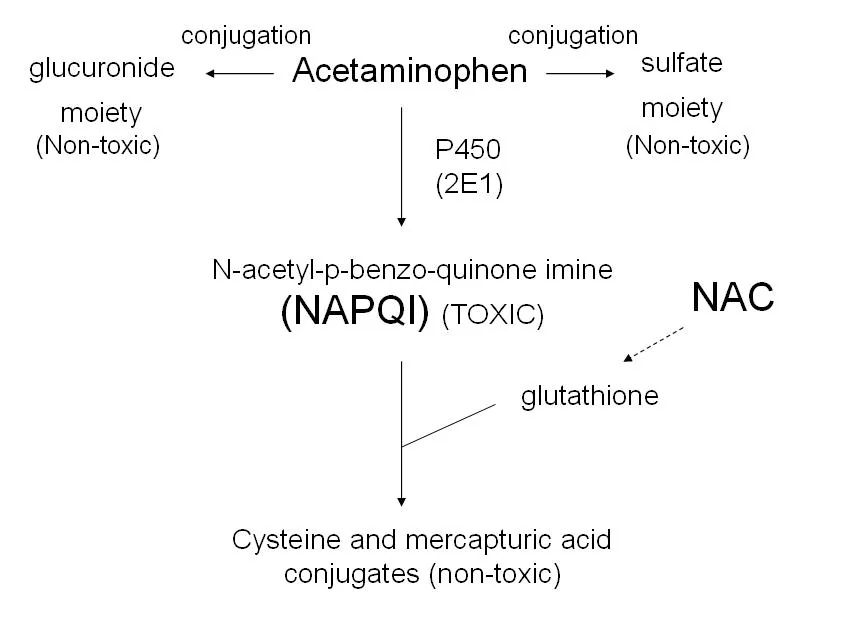
- Paracetamol overdose: the commonest agent in UK self-poisoning - treat with N-acetylcysteine using the plasma level at 4 hours, or immediately for staggered ingestion, and never wait for symptoms.
- Assess needs as well as risk: identify the problems the self-harm is attempting to solve - housing, debt, abuse, pain, isolation - since addressing these changes outcome more than any prediction score.
- Safety planning and follow-up: a collaborative safety plan, means restriction and prompt follow-up within 48 hours of discharge from an emergency presentation.
Introduction
Self-harm is defined as intentional self-poisoning or self-injury, irrespective of the apparent purpose of the act.1 This deliberately broad definition matters: it makes no assumption about whether the person intended to die, and it covers the whole range from an impulsive act of self-injury to relieve overwhelming distress, through to a carefully planned and concealed attempt to end life.
It is common and rising, particularly in adolescents and young adults, and accounts for around 200,000 hospital presentations a year in England.2 Self-poisoning - most often with paracetamol - accounts for the majority of hospital-presenting episodes, while self-injury such as cutting is more common in the community and frequently never reaches services at all.
Its clinical importance rests on one central fact: self-harm is the single strongest predictor of subsequent suicide, with risk elevated roughly 50-100 fold compared with the general population, and highest in the first six to twelve months after an episode. Every presentation is therefore a window in which assessment and intervention genuinely change outcomes - which is why NICE requires a full psychosocial assessment for everyone, regardless of how trivial the physical injury looks.
Aetiology and functions of self-harm
Self-harm serves different functions for different people, and often several at once for the same person. Understanding what the act is doing for the individual is more clinically useful than categorising it as 'suicidal' or 'not suicidal', and it directly shapes what alternative strategies might help.5
- Affect regulation - the commonest function. Self-injury produces rapid, if temporary, relief from overwhelming emotional distress, anger or tension, which powerfully reinforces the behaviour.
- Ending dissociation - inducing physical sensation to interrupt numbness or a sense of unreality, and to feel present again
- Self-punishment - an expression of shame, guilt or self-loathing, common where there is a history of abuse
- Communication - conveying a degree of distress that the person cannot express in words, often after other attempts to be heard have failed
- Suicidal intent - a genuine wish to die, present in a substantial minority of episodes and in most that result in death
- Influencing others - occasionally an attempt to change a situation or another person's behaviour, though this framing is frequently over-applied and used dismissively
Contributing factors
- Psychiatric illness - depression, borderline pattern personality disorder, eating disorders, PTSD and substance use disorder all substantially increase risk
- Substance and alcohol use - both as a chronic risk factor and acutely, through disinhibition at the time of the act
- Childhood adversity - abuse, neglect and bullying
- Social factors - unemployment, debt, housing insecurity, social isolation, relationship breakdown and domestic abuse
- Physical illness and chronic pain
- Contagion and modelling - exposure to self-harm in peers, or through media and online content, has a well-documented effect, particularly in adolescents
Risk factors for suicide
These factors inform clinical judgement and identify where intervention may help. They must not be totted up into a score to decide who is discharged - risk factors are common in the population and poor at predicting the individual.
| Domain | Factors |
|---|---|
| Demographic | Male sex (higher completion rate); older age; social isolation; unemployment; certain occupations including doctors, nurses, vets and farmers, partly through access to means |
| Psychiatric | Depression, bipolar disorder, schizophrenia, personality disorder, anorexia nervosa; alcohol and substance misuse; hopelessness as a symptom, which predicts more strongly than depression severity |
| Historical | Previous self-harm - the strongest single predictor; family history of suicide; childhood abuse |
| Act-related | High degree of planning; precautions taken against discovery; leaving a note or putting affairs in order; use of a violent or highly lethal method; regret at surviving |
| Physical | Chronic painful illness, terminal diagnosis, recent hospital discharge |
| Situational | Recent bereavement or relationship breakdown; financial crisis or debt; pending criminal proceedings; access to lethal means |
Assessment after an episode
Assessment has two parallel strands, and both must happen: the immediate physical management of the injury or poisoning, and a full psychosocial assessment. Neither substitutes for the other, and physical treatment must not be conditional on psychiatric cooperation - or vice versa.
Immediate physical assessment
- A to E assessment, with attention to airway and conscious level in overdose
- Establish exactly what was taken or done: agent, dose, time, whether staggered, co-ingestants including alcohol, and any current symptoms
- Bloods - paracetamol and salicylate levels in all self-poisoning even when denied, plus U&Es, LFTs, INR, glucose, venous blood gas and, where indicated, an ECG for QRS/QTc-prolonging agents such as tricyclics and citalopram
- Contact TOXBASE or the National Poisons Information Service for any agent you are not fully confident about - this is expected practice, not a sign of weakness4
- Wound assessment for self-injury, including tendon and nerve involvement in forearm lacerations, which is easily missed
The psychosocial assessment
NICE requires that everyone presenting with self-harm receives a comprehensive psychosocial assessment by a trained mental health practitioner.3 It is a therapeutic intervention in its own right, not merely an information-gathering exercise - a good assessment reduces repetition rates independently of what follows it.
- Before the act - what was happening in the preceding hours and days; the precipitant; whether it was planned or impulsive; whether alcohol or drugs were involved; whether precautions were taken against discovery; whether a note was left or affairs put in order
- The act itself - what was done, what the person believed would happen (perceived lethality often matters more than actual lethality), and what they intended
- After the act - how they came to be found or presented; whether they sought help themselves; and critically, how they feel now about having survived - regret at surviving is a significant concern
- Current mental state - full MSE, with specific attention to hopelessness, ongoing suicidal ideation, intent and plan, and psychotic symptoms
- Psychiatric and self-harm history - previous episodes, escalation in frequency or lethality, past and current treatment, and engagement with services
- Social circumstances and needs - housing, finances and debt, employment, relationships, caring responsibilities, domestic abuse, immigration status, bereavement
- Protective factors - dependants, supportive relationships, future plans, faith, reasons for living, and things that have helped previously
- Safeguarding - for the person themselves and for any children or vulnerable adults in the household
Management
In the emergency department
- Treat the physical consequences promptly and with the same standard of care as any other patient - this is a recurring area of documented inequality
- Provide adequate analgesia for wound management. Withholding it as a supposed deterrent is unethical and ineffective.
- Offer a place of safety and a calm environment while awaiting assessment, minimising waiting where possible, as prolonged waits increase the likelihood of the person leaving before assessment
- Assess mental capacity where a person refuses treatment for a potentially fatal overdose. Capacity is decision-specific: a person may lack capacity to refuse life-saving treatment because depression or intoxication prevents them from weighing the information, in which case treatment can proceed in their best interests under the Mental Capacity Act. The Mental Health Act does not authorise treatment of the physical consequences of self-harm.
- Do not discharge before the psychosocial assessment simply because the person is medically fit
Ongoing management
- Collaborative safety planning - a written, personalised plan identifying warning signs, internal coping strategies, people and places that provide distraction, who to contact in a crisis, and how the environment will be made safer
- Means restriction - limiting access to the method used and to other lethal means. Reducing paracetamol pack sizes measurably reduced deaths nationally, and the same principle applies individually: removing stockpiled medication, asking a family member to hold supplies, and securing ligature points or firearms.
- Prescribing safely - dispense in small quantities, avoid tricyclics where overdose risk is significant, and consider who holds the medication
- Treat underlying psychiatric illness - depression, psychosis, substance misuse and PTSD all have specific, effective treatments
- CBT-based psychological intervention specifically for self-harm is recommended by NICE, and DBT where there is a borderline pattern with frequent repetition
- Address social needs - referral for debt advice, housing support, domestic abuse services or benefits assistance often does more than anything medical
- Follow-up within 48 hours of discharge after an emergency presentation, since the period immediately after discharge carries a markedly elevated risk
Special considerations
Children and young people
- All under-18s presenting with self-harm should normally be admitted overnight to a paediatric ward and assessed by CAMHS the following day
- Assess Gillick competence for treatment decisions, and involve parents or carers unless doing so would not be in the child's interests
- Safeguarding assessment is mandatory - consider abuse, neglect, exploitation, bullying and online influences
- Ask specifically about social media and online content promoting self-harm
Frequent repetition
People who self-harm repeatedly are at the highest risk of eventual suicide, yet are often the group who receive the least sympathetic care. Each presentation still requires assessment - assumptions that this episode is 'the same as usual' are precisely how escalation is missed. A shared care plan agreed across the emergency department, crisis team and GP provides consistency and reduces the variability in response that itself destabilises the person.
Red flags
Prognosis
Around 15-25% of people who present with self-harm will repeat within a year, and roughly 0.5-2% will die by suicide within twelve months - a risk many times that of the general population, and highest in the weeks immediately following an episode and after discharge from hospital or inpatient care.
Prognosis is meaningfully improved by a high-quality psychosocial assessment, prompt follow-up, treatment of underlying psychiatric illness, means restriction and practical resolution of the social problems driving the behaviour. Poorer outcomes are associated with repeated episodes, escalating lethality, comorbid substance misuse, persistent hopelessness, social isolation and - importantly and modifiably - a poor experience of care, which reduces the likelihood that the person will seek help next time.
References
- NICE NG225. Self-harm: assessment, management and preventing recurrence. 2022. Available here
- NICE CKS. Self-harm. Available here
- NICE CG16 and QS34. Quality standard for self-harm. Available here
- TOXBASE. National Poisons Information Service clinical toxicology database. Available here
- Royal College of Psychiatrists. Self-harm, suicide and risk: a summary. CR229. 2020. Available here
This article is written for revision and education. It is not clinical guidance and must not be used to make decisions about the care of a patient. Always check current NICE guidance and local protocols.