
Hyposplenism and Splenectomy
Key points
- Hyposplenism: reduced or absent splenic function, whether from surgical removal (asplenia) or from a spleen that is present but not working - as in sickle cell disease and coeliac disease.
- What the spleen does: it filters encapsulated bacteria from the blood (opsonisation-dependent clearance), removes senescent and abnormal red cells, and houses a major reservoir of memory B cells and IgM production.
- The core risk: overwhelming post-splenectomy infection (OPSI) - fulminant sepsis with encapsulated organisms, which can progress from feeling unwell to death within hours and carries a mortality of up to 50%.
- The organisms: Streptococcus pneumoniae (by far the commonest), Haemophilus influenzae type b, and Neisseria meningitidis - all encapsulated. Also Capnocytophaga canimorsus (dog bites) and severe malaria and babesiosis.
- Blood film findings: Howell-Jolly bodies are the hallmark - nuclear remnants in red cells that a working spleen would have removed. Also target cells, Pappenheimer bodies, acanthocytes and a reactive thrombocytosis.
- Vaccination: pneumococcal, Hib, meningococcal (ACWY and B) and annual influenza. Give at least 2 weeks before elective splenectomy, or from 2 weeks after an emergency procedure.
- Antibiotic prophylaxis: lifelong phenoxymethylpenicillin (or a macrolide if penicillin-allergic), plus a rescue supply of antibiotics for the patient to start immediately if they become febrile and cannot access care.
- Patient education is the key intervention: patients need a splenectomy card or alert bracelet, an understanding that fever is an emergency, and malaria and travel advice - education matters more than any single drug.
Introduction
The spleen is not a redundant organ. It performs two functions that are difficult to replace: it acts as a mechanical and immunological filter removing encapsulated bacteria and abnormal red cells from the circulation, and it is a major site of antibody production and immune memory. Losing splenic function therefore creates a specific, lifelong vulnerability to a defined set of infections.1
Crucially, hyposplenism is not confined to patients who have had a splenectomy. A functionally hyposplenic patient with an anatomically present spleen - most importantly in sickle cell disease and coeliac disease - carries the same risks and needs the same prophylaxis, but is far more likely to have it overlooked.
Causes
Surgical (asplenia)
- Trauma - splenic rupture, historically the commonest indication, though conservative management is now preferred where possible
- Haematological disease - hereditary spherocytosis, refractory immune thrombocytopenic purpura, autoimmune haemolytic anaemia, hypersplenism
- Malignancy - lymphoma, or as part of another operation (e.g. distal pancreatectomy, gastrectomy)
- Splenic infarction, abscess or aneurysm
Functional hyposplenism (spleen present but not working)
- Sickle cell disease - repeated splenic infarction causes progressive autosplenectomy, typically complete by early adulthood; these children are at highest risk of pneumococcal sepsis in the first few years of life
- Coeliac disease - a frequently forgotten cause of functional hyposplenism, and a reason to check the blood film and consider vaccination
- Inflammatory bowel disease
- Amyloidosis
- Autoimmune disease - systemic lupus erythematosus, rheumatoid arthritis
- After haematopoietic stem cell transplant, or following splenic irradiation
- Congenital asplenia, including as part of heterotaxy syndromes
Recognising hyposplenism on the blood film
Because functional hyposplenism has no outward signs, the blood film is often what reveals it - and recognising these features can prompt life-saving prophylaxis in a patient nobody realised was at risk.
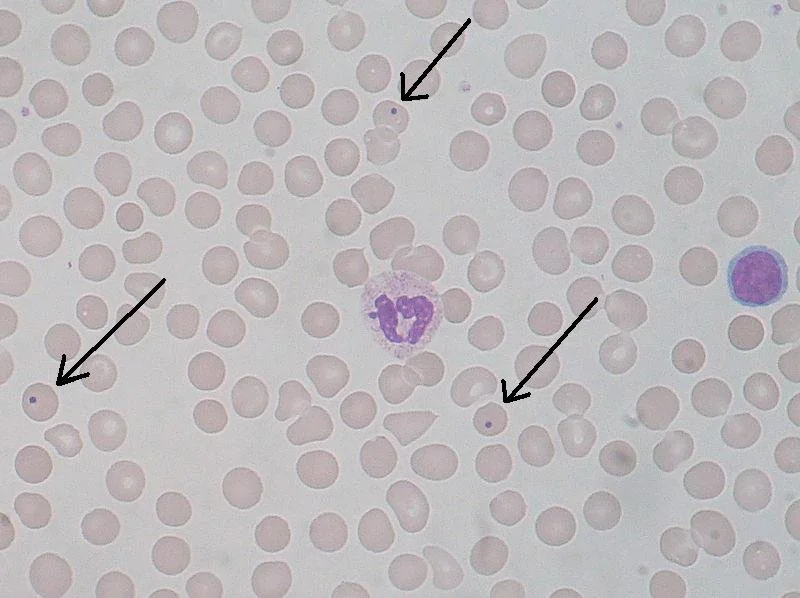
- Howell-Jolly bodies - the classic finding; small, round, dark-staining nuclear remnants within red cells. A normally functioning spleen 'pits' these out, so their presence signals splenic dysfunction
- Target cells (codocytes)
- Pappenheimer bodies - iron-containing granules
- Acanthocytes - spiculated red cells
- Reactive thrombocytosis - the platelet count often rises substantially after splenectomy, since a third of the platelet mass is normally pooled in the spleen
- Lymphocytosis and monocytosis
Overwhelming post-splenectomy infection
OPSI is the reason all of this matters. It is a fulminant septicaemia that can progress from a mild flu-like prodrome to shock, DIC and death within 24-48 hours, with a mortality of up to 50% even with intensive care.2
Why encapsulated organisms
Encapsulated bacteria resist phagocytosis unless they are first opsonised by antibody and complement, and cleared by splenic macrophages. Without a spleen, this clearance mechanism is lost, and the organisms can multiply unchecked in the bloodstream.
| Organism | Notes |
|---|---|
| Streptococcus pneumoniae | By far the commonest cause of OPSI (accounting for the majority of cases) - the reason pneumococcal vaccination and penicillin prophylaxis are central |
| Haemophilus influenzae type b | Encapsulated; Hib vaccination required |
| Neisseria meningitidis | Encapsulated; requires MenACWY and MenB vaccination |
| Capnocytophaga canimorsus | Transmitted by dog bites - a specific and easily missed hazard; any animal bite warrants prompt antibiotic cover |
| Escherichia coli, Salmonella, group B streptococci | Less common but recognised causes |
| Plasmodium (malaria) and Babesia | Cause far more severe disease in hyposplenic patients - meticulous malaria prophylaxis and travel advice are essential |
Risk is highest in the first 2 years after splenectomy and in children, but it is lifelong - cases occur decades later, which is why prophylaxis and education must not lapse.
Prevention
Vaccination
- Pneumococcal vaccination - the single most important; given according to current UK schedule, with revaccination as recommended
- Haemophilus influenzae type b (Hib)
- Meningococcal ACWY and MenB
- Annual influenza vaccination - important both directly and because influenza predisposes to secondary bacterial pneumonia
- Timing: ideally at least 2 weeks before elective splenectomy, to allow an adequate antibody response while the spleen is still functioning. After an emergency splenectomy, vaccinate from 2 weeks post-operatively
- Ensure the routine immunisation schedule is otherwise complete, and keep vaccinations up to date lifelong
Antibiotic prophylaxis
- Phenoxymethylpenicillin (penicillin V) is first line; a macrolide (e.g. erythromycin or clarithromycin) if penicillin-allergic
- Duration: recommended lifelong for high-risk patients (children, the first 2 years after splenectomy, immunosuppressed patients, and those with a previous episode of invasive pneumococcal disease). Practice varies for lower-risk adults after 2 years, and the decision should be individualised and clearly documented
- A rescue ("just in case") supply of a broad-spectrum antibiotic - typically co-amoxiclav - for the patient to keep at home and start immediately if they develop a fever and cannot access medical care quickly, particularly when travelling
Education and documentation
- Splenectomy/asplenia card and a medical alert bracelet, so that any clinician encountering them recognises the risk
- Clear advice that any fever is a medical emergency requiring same-day assessment - patients must understand that they can deteriorate over hours rather than days
- Travel and malaria advice - rigorous chemoprophylaxis and bite avoidance, since malaria is far more severe without a spleen
- Animal bite advice - seek prompt medical attention and antibiotic cover for any bite, given Capnocytophaga risk
- Inform the GP and ensure it is coded in the primary care record, so prophylaxis and vaccination are maintained lifelong
- Dental and surgical procedures - discuss whether additional antibiotic cover is needed
Management of the febrile hyposplenic patient
- Immediate empirical IV antibiotics covering encapsulated organisms, following the local sepsis and asplenia protocols
- Blood cultures, FBC, U&Es, LFTs, CRP, lactate and clotting - and a blood film, which may show organisms within red cells in severe pneumococcal sepsis or malaria
- Malaria films if there is any travel history
- Fluid resuscitation and early critical care involvement if there is any evidence of shock
- A low threshold for admission - do not discharge a febrile hyposplenic patient on oral antibiotics without senior review
Other consequences of splenectomy
- Thrombocytosis - the platelet count commonly rises markedly after splenectomy; thromboprophylaxis is important perioperatively, and some patients need antiplatelet therapy if counts are extremely high
- Increased venous thromboembolism risk, including portal vein thrombosis in the early post-operative period - consider it in any post-splenectomy patient with abdominal pain
- Surgical complications - bleeding, pancreatic tail injury, subphrenic abscess, and (with open surgery) the usual wound complications
- Persistent haematological disease if an accessory spleen is present - a residual accessory spleen can cause treatment failure after splenectomy for ITP or spherocytosis, and is suggested by the absence of Howell-Jolly bodies in a patient who has had a splenectomy
- Pulmonary hypertension - a recognised long-term association in some patient groups
Red flags
Prognosis
With complete vaccination, adherent antibiotic prophylaxis and good patient education, most people without a functioning spleen live entirely normal lives with normal life expectancy. The absolute annual risk of overwhelming infection is low - but the case fatality when it occurs is very high, which is what justifies the intensity of preventive measures.2
Risk is greatest in children, in the first two years after splenectomy, and in the immunosuppressed, but never returns to that of the general population. Because the risk persists for life while awareness tends to fade with time, the most valuable long-term interventions are the least technological: an accurate primary care record, a splenectomy card the patient actually carries, up-to-date vaccinations, and a patient who genuinely understands that a fever means seeking help the same day.
References
- Davies JM, Lewis MPN, Wimperis J et al. Review of guidelines for the prevention and treatment of infection in patients with an absent or dysfunctional spleen. Br J Haematol. 2011. Available here
- Rubin LG, Schaffner W. Care of the Asplenic Patient. N Engl J Med. 2014. Available here
- UK Health Security Agency. Immunisation of individuals with underlying medical conditions (Green Book, Chapter 7). Available here
- Gusloureiro, CC BY-SA 3.0, via Wikimedia Commons. Available here
- BNF. Phenoxymethylpenicillin - indications and dosing. Available here
This article is written for revision and education. It is not clinical guidance and must not be used to make decisions about the care of a patient. Always check current NICE guidance and local protocols.