
Tonsillitis and Pharyngitis
Key points
- Tonsillitis/pharyngitis: inflammation of the tonsils and/or pharynx, usually viral, with Group A Streptococcus the most important bacterial cause.
- Clinical scoring: Centor and FeverPAIN scores estimate the probability of streptococcal infection and guide antibiotic decisions.
- Key differential: infectious mononucleosis (EBV) - especially in teenagers/young adults, with splenomegaly and prolonged symptoms.
- Amoxicillin trap: avoid amoxicillin if glandular fever is possible - it causes a widespread maculopapular rash.
- Management: supportive care for most; phenoxymethylpenicillin for those with a high probability of streptococcal infection.
- Tonsillectomy: reserved for recurrent tonsillitis meeting defined frequency criteria, or for airway obstruction.
- Complications: peritonsillar abscess (quinsy), and rarely rheumatic fever, glomerulonephritis, or Lemierre's syndrome.
- Red flags: trismus, drooling, stridor or unilateral tonsillar swelling suggest a deep space infection needing urgent assessment.
Introduction
Acute sore throat, caused by tonsillitis, pharyngitis, or both together, is one of the most common presentations in primary care. The great majority are viral and self-limiting, but distinguishing likely bacterial infection - principally Group A Streptococcus (Streptococcus pyogenes) - matters both for targeted antibiotic use and because untreated streptococcal infection carries a small risk of serious post-infective complications.1
Equally important is recognising the presentations that are not simple tonsillitis: infectious mononucleosis, which is easily mistaken for bacterial tonsillitis but has a well-known antibiotic trap, and the deep space infections and airway emergencies that occasionally follow.
Aetiology
Viral infection accounts for the large majority of cases - rhinovirus, adenovirus, influenza, parainfluenza, and Epstein-Barr virus (EBV, causing infectious mononucleosis) are all common causes, often with accompanying coryzal symptoms or cough.1
Group A Streptococcus is the most important bacterial cause, particularly in children and young adults, and is the target of clinical scoring systems because it is the organism whose treatment measurably reduces complication risk. Other bacteria (Group C/G streptococci, rarely Corynebacterium diphtheriae in unvaccinated populations) are much less common causes in the UK.
Clinical features
Common features across causes include sore throat, odynophagia (pain on swallowing), fever, malaise, and tonsillar erythema with or without exudate, alongside tender cervical lymphadenopathy.1 Viral causes are more often accompanied by cough, coryza, hoarseness and conjunctivitis, while streptococcal infection more typically causes a sudden onset of fever, tonsillar exudate, and tender anterior cervical lymphadenopathy, without a significant cough.
| Centor criteria (1 point each) | FeverPAIN criteria (1 point each) |
|---|---|
| Tonsillar exudate | Fever in the past 24 hours |
| Tender anterior cervical lymphadenopathy | Purulence (tonsillar exudate) |
| Fever >38°C | Attend within 3 days of symptom onset |
| Absence of cough | severely Inflamed tonsils |
| - | No cough or coryza |
A Centor score of 3-4 or a FeverPAIN score of 4-5 indicates a higher probability of streptococcal infection (around 32-56% and 62-65% respectively) and is used, alongside clinical judgement, to guide antibiotic decisions; lower scores make antibiotics much less likely to help.2
Examination
Inspect the tonsils for size, erythema and exudate, and palpate the anterior cervical chain for tender lymphadenopathy. Look specifically for features suggesting infectious mononucleosis: prominent, often bilateral tonsillar exudate, palatal petechiae, marked posterior cervical or generalised lymphadenopathy, and splenomegaly on abdominal examination.1
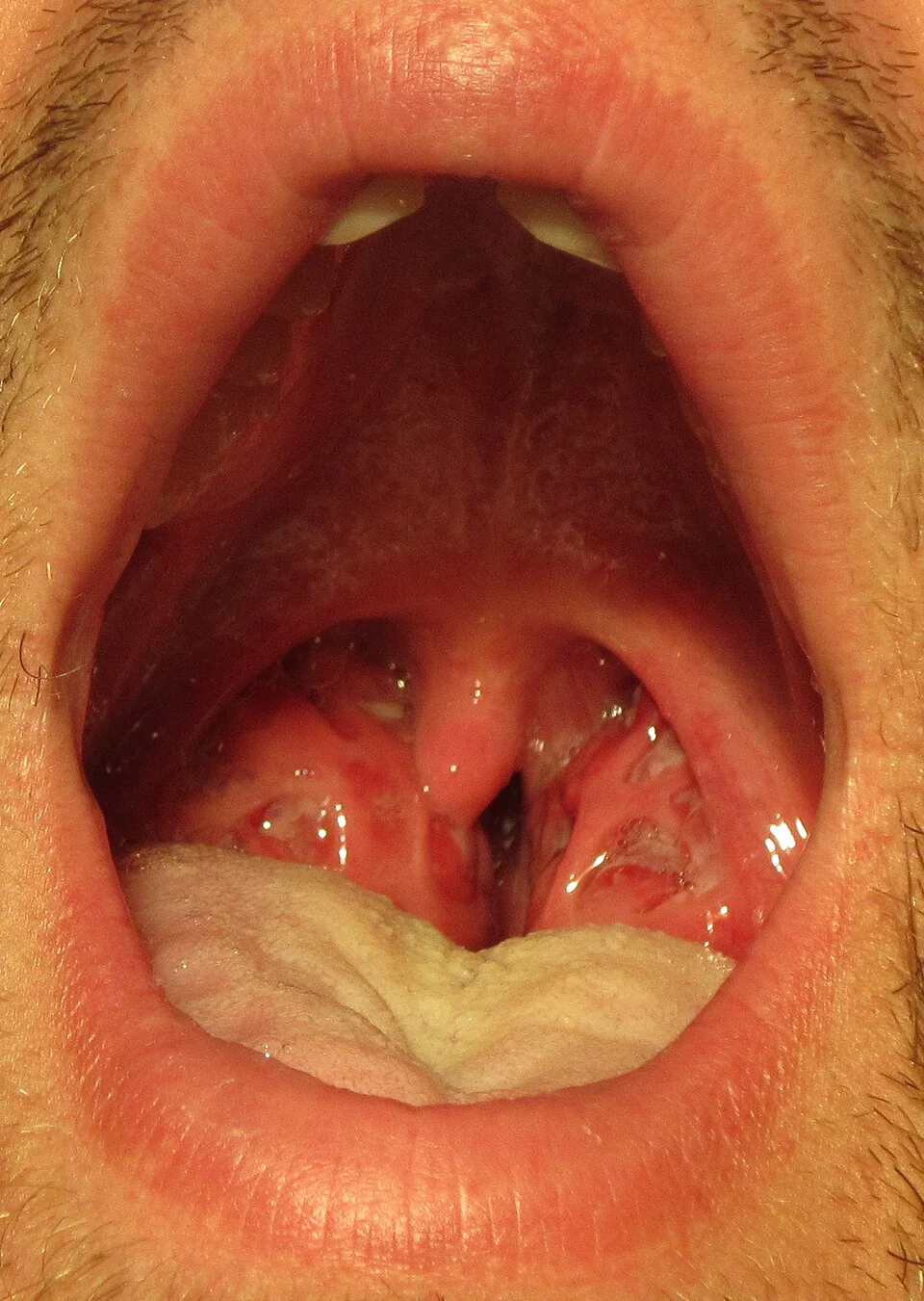
Always assess for signs of a deep space infection or airway compromise: trismus (difficulty opening the mouth), a muffled "hot potato" voice, drooling, uvular deviation, or stridor - these suggest peritonsillar abscess or beyond, and are covered in detail in the quinsy and airway compromise articles.
Differential diagnosis
- Infectious mononucleosis (EBV): prolonged symptoms, marked lymphadenopathy, splenomegaly, more common in teenagers and young adults
- Peritonsillar abscess (quinsy): unilateral tonsillar swelling, trismus, and a muffled voice - a surgical emergency
- Acute HIV seroconversion illness: sore throat with a wider systemic illness, rash and lymphadenopathy
- Diphtheria: rare in vaccinated populations, but consider with a grey pseudomembrane and systemic toxicity
- Agranulocytosis: consider in any patient on a relevant drug (e.g. carbimazole, clozapine) presenting with a severe sore throat - always ask about medication history
Investigations
Most acute sore throat is diagnosed and managed clinically. Throat swabs are not routinely recommended, since results take days to return and do not change immediate management; they are reserved for specific situations such as suspected outbreaks, recurrent presentations, or immunocompromised patients.1
If infectious mononucleosis is suspected, a Monospot (heterophile antibody) test or EBV serology supports the diagnosis, alongside a full blood count, which characteristically shows lymphocytosis with atypical lymphocytes. If agranulocytosis is suspected from the drug history, an urgent FBC is essential.
Management
Supportive care - analgesia (paracetamol and/or ibuprofen), adequate fluid intake, and safety-netting advice - is appropriate for the majority of patients, since most sore throats, viral or bacterial, resolve within a week regardless of antibiotic use.1
Antibiotics are guided by the Centor or FeverPAIN score alongside clinical judgement: patients with a low probability of streptococcal infection are managed without antibiotics, while those with a high probability, or with features of marked systemic upset, are offered phenoxymethylpenicillin (or clarithromycin/erythromycin in penicillin allergy) for 5-10 days.2 A back-up (delayed) prescription is a reasonable middle ground for intermediate-risk patients.
Tonsillectomy
Tonsillectomy is considered for recurrent tonsillitis that is disabling and meets defined frequency criteria - broadly, 7 or more episodes in the preceding year, 5 or more per year for 2 consecutive years, or 3 or more per year for 3 consecutive years - each episode adequately documented.3 Other indications include tonsillar hypertrophy causing obstructive sleep apnoea, suspected tonsillar malignancy, and recurrent peritonsillar abscess.
Complications
- Peritonsillar abscess (quinsy): the most common suppurative complication, covered separately
- Parapharyngeal or retropharyngeal abscess: deeper spread of infection, more serious and can threaten the airway
- Otitis media: particularly in children, from spread via the eustachian tube
- Scarlet fever: a toxin-mediated rash accompanying streptococcal infection
- Rheumatic fever and post-streptococcal glomerulonephritis: rare immune-mediated complications of untreated streptococcal infection
- Lemierre's syndrome: a rare but serious septic thrombophlebitis of the internal jugular vein, classically following Fusobacterium necrophorum pharyngitis, with septic emboli to the lungs
Red flags
Prognosis
The majority of episodes of tonsillitis and pharyngitis, whatever the cause, resolve within about a week with supportive care. Serious bacterial complications are uncommon with appropriate assessment and selective antibiotic use, and the goal of clinical scoring systems is precisely to target antibiotics at those most likely to benefit while avoiding unnecessary use in the many patients who will recover regardless.1 Infectious mononucleosis can cause fatigue lasting several weeks to months even after the acute sore throat resolves.
References
- NICE Clinical Knowledge Summaries (CKS). Sore throat - acute. 2023. Available here
- NICE NG84. Sore throat (acute): antimicrobial prescribing. 2018. Available here
- SIGN 117. Management of sore throat and indications for tonsillectomy. Available here
- James Heilman, MD, CC BY-SA 3.0, via Wikimedia Commons. Available here
This article is written for revision and education. It is not clinical guidance and must not be used to make decisions about the care of a patient. Always check current NICE guidance and local protocols.