
Transplantation and Immunosuppression
Key points
- Kidney transplantation: the treatment of choice for suitable patients with end stage renal disease, giving better survival and quality of life than dialysis. A live donor graft outlasts a deceased donor graft.
- Surgical placement: the graft is placed extraperitoneally in the iliac fossa and anastomosed to the external iliac vessels, with the ureter implanted into the bladder. The native kidneys are usually left in situ.
- Matching: ABO compatibility is essential, plus HLA matching (at HLA-A, -B and -DR) and a negative crossmatch to exclude preformed donor-specific antibodies.
- Hyperacute rejection: occurs within minutes to hours, mediated by preformed antibodies causing complement activation and thrombosis. The graft is unsalvageable and must be removed - now rare because of crossmatching.
- Acute rejection: occurs over days to months and is usually T-cell mediated. Presents with a rising creatinine, sometimes fever and graft tenderness. Diagnosed by biopsy and usually reversible with high-dose steroids.
- Standard immunosuppression: induction with basiliximab (or ATG), then maintenance with a calcineurin inhibitor (tacrolimus) plus an antiproliferative (mycophenolate) plus or minus prednisolone.
- Key drug toxicities: tacrolimus and ciclosporin are nephrotoxic; ciclosporin causes gum hypertrophy and hirsutism, tacrolimus causes diabetes and tremor. Both interact heavily via CYP3A4.
- Long-term risks: infection (CMV, BK virus, PCP), malignancy (especially skin cancer and post-transplant lymphoproliferative disorder), cardiovascular disease and chronic allograft failure.
Introduction
Kidney transplantation is the optimal form of renal replacement therapy for patients who are fit enough for surgery and lifelong immunosuppression. Compared with remaining on dialysis it offers substantially better survival, better quality of life, restoration of fertility, freedom from dialysis schedules and fluid restriction, and lower long-term cost to the health service.1
Around 3,000 to 3,500 kidney transplants are performed annually in the UK. Roughly a third come from living donors and the remainder from deceased donors. The median wait for a deceased donor kidney is two to three years, and longer for patients with unusual blood groups or high levels of pre-existing antibody sensitisation.
Donors, matching and assessment
Types of donor
| Donor type | Detail | Outcome |
|---|---|---|
| Living related or unrelated donor | A healthy volunteer (family member, friend, spouse, or an altruistic stranger) donates one kidney, usually laparoscopically. Allows elective, planned surgery and pre-emptive transplantation. The UK Living Kidney Sharing Scheme enables paired and pooled exchange where a willing donor is incompatible with their intended recipient. | Best graft and patient survival |
| Deceased donor after brain death (DBD) | Donation following confirmation of death by neurological criteria, with the circulation maintained until organ retrieval | Good, with shorter ischaemic times than DCD |
| Deceased donor after circulatory death (DCD) | Donation following death confirmed by cardiorespiratory criteria; the kidney sustains a period of warm ischaemia before retrieval | Higher rates of delayed graft function, but long-term outcomes approach those of DBD |
Matching and immunological assessment
- ABO blood group compatibility - essential, as ABO antibodies are naturally occurring and would cause hyperacute rejection (ABO-incompatible transplantation is possible in specialist centres with antibody removal, but is not routine)
- HLA (human leucocyte antigen) matching - the closer the match at HLA-A, HLA-B and HLA-DR, the better the long-term graft survival. HLA-DR mismatch matters most. A '000 mismatch' is ideal but rarely achieved.
- Crossmatching - recipient serum is tested against donor lymphocytes. A positive crossmatch indicates preformed donor-specific antibodies and is an absolute contraindication, because it predicts hyperacute rejection.4
- Panel reactive antibody / calculated reaction frequency - quantifies how sensitised a recipient is. Sensitisation results from previous transplants, blood transfusions and pregnancy, which is why unnecessary transfusion is avoided in potential transplant candidates.
- Virology - CMV, EBV, hepatitis B and C, HIV and varicella status in both donor and recipient, to guide prophylaxis
The operation
The graft is placed heterotopically and extraperitoneally in the iliac fossa - usually the right, because the iliac vessels are more superficial there - through a curved 'hockey stick' incision. The renal artery and vein are anastomosed to the external iliac artery and vein, and the donor ureter is implanted into the bladder over a temporary stent.
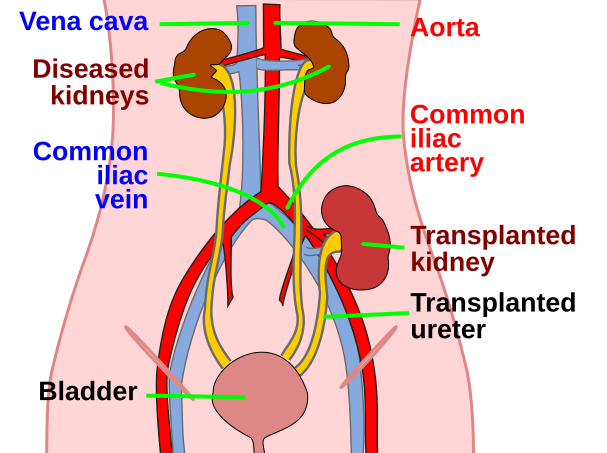
- The native kidneys are usually left in place - removing them adds morbidity for no benefit. Native nephrectomy is reserved for specific indications: massively enlarged polycystic kidneys needing space, refractory hypertension, chronic infection or stones, or suspected malignancy.
- The superficial position has a practical consequence - the graft is palpable in the iliac fossa and can be examined for tenderness and, with a stethoscope, for a bruit. Any transplant patient with graft tenderness needs assessment.
- A functioning graft usually produces urine immediately; delayed graft function (needing dialysis in the first week) is common after DCD donation and usually reflects acute tubular injury from ischaemia rather than rejection
- Immediate surgical complications include bleeding, renal artery or vein thrombosis (a surgical emergency presenting with sudden anuria and graft pain), urine leak, ureteric stenosis, lymphocoele and wound infection
Rejection
Rejection is an immune response of the recipient against donor antigens. It is classified by timing and mechanism, and the distinction is heavily examined because the treatment and prognosis differ completely.
| Type | Timing | Mechanism | Features and management |
|---|---|---|---|
| Hyperacute | Minutes to hours - often on the operating table | Preformed recipient antibodies (ABO or anti-HLA) bind donor endothelium, activating complement and causing thrombosis and infarction - a type II hypersensitivity reaction | The graft becomes mottled, dusky and swollen and never functions. It is unsalvageable and must be removed (graft nephrectomy). Now rare, because ABO matching and crossmatching prevent it. |
| Acute T-cell mediated (cellular) | Days to months, most often in the first 6 months | T-lymphocyte-mediated infiltration of the graft interstitium and tubules | Rising creatinine, sometimes with fever, oliguria, hypertension and a tender, swollen graft. Diagnosed on biopsy. Usually reversible with high-dose intravenous methylprednisolone; resistant cases receive ATG. |
| Acute antibody-mediated (humoral) | Days to months, or later | Donor-specific antibodies developing after transplantation, causing complement-mediated endothelial injury; C4d staining on biopsy | Rising creatinine. Treated with plasma exchange, intravenous immunoglobulin and rituximab. Worse prognosis than cellular rejection. |
| Chronic allograft injury | Months to years | Multifactorial - chronic antibody-mediated injury, calcineurin inhibitor toxicity, hypertension, recurrent disease and interstitial fibrosis with tubular atrophy | Gradual creatinine rise with proteinuria and hypertension. Largely irreversible; management is to optimise blood pressure, minimise calcineurin inhibitor exposure and prepare for return to dialysis or re-transplantation. |
Immunosuppression
Immunosuppression has two phases: induction at the time of transplantation, and lifelong maintenance. The aim is to prevent rejection while minimising the infective, malignant and metabolic consequences of over-immunosuppression - a balance that has to be individualised and revisited.
Induction
- Basiliximab - a monoclonal antibody against the IL-2 receptor (CD25) on activated T cells; the standard induction agent, well tolerated
- Anti-thymocyte globulin (ATG) - a polyclonal T-cell depleting antibody, used in higher immunological risk recipients and to treat steroid-resistant rejection; causes cytokine release and profound lymphopenia
- High-dose corticosteroid at induction
Maintenance
Standard UK maintenance is a calcineurin inhibitor plus an antiproliferative agent, with or without a corticosteroid - typically tacrolimus, mycophenolate mofetil and prednisolone.2
| Drug | Mechanism | Characteristic adverse effects |
|---|---|---|
| Tacrolimus | Calcineurin inhibitor - binds FKBP-12, inhibiting calcineurin and so blocking IL-2 transcription and T-cell activation | Nephrotoxicity (dose-dependent, and a major cause of chronic graft dysfunction), new-onset diabetes after transplantation, tremor and neurotoxicity, hypertension, hyperkalaemia, hypomagnesaemia, alopecia. Narrow therapeutic index - requires trough level monitoring. |
| Ciclosporin | Calcineurin inhibitor - binds cyclophilin, same downstream effect | Nephrotoxicity, hypertension, gum (gingival) hypertrophy, hirsutism, tremor, hyperlipidaemia, hyperuricaemia and gout, hyperkalaemia. Also needs level monitoring. |
| Mycophenolate mofetil | Inhibits inosine monophosphate dehydrogenase, blocking de novo purine synthesis on which lymphocytes uniquely depend | Bone marrow suppression (leucopenia, anaemia), diarrhoea and gastrointestinal intolerance, increased infection risk. Teratogenic - strictly contraindicated in pregnancy, and effective contraception is mandatory. |
| Azathioprine | A purine analogue; its metabolite inhibits DNA synthesis | Myelosuppression, hepatotoxicity, pancreatitis. Catastrophic interaction with allopurinol and febuxostat - xanthine oxidase inhibition blocks azathioprine metabolism and causes profound myelosuppression. Check TPMT activity before starting. |
| Prednisolone | Broad anti-inflammatory and immunosuppressive effects through altered gene transcription | Cushingoid features, diabetes, osteoporosis, weight gain, hypertension, cataracts, poor wound healing, mood disturbance, adrenal suppression - hence the drive to steroid-sparing regimens |
| Sirolimus / everolimus | mTOR inhibitors - block IL-2 signal transduction and cell cycle progression | Impaired wound healing and lymphocoele (so usually avoided immediately post-operatively), proteinuria, pneumonitis, mouth ulcers, hyperlipidaemia. Not nephrotoxic, so useful where calcineurin inhibitor toxicity is a problem; may also reduce skin cancer risk. |
| Belatacept | Fusion protein blocking CD80/86 co-stimulation of T cells | Avoids calcineurin nephrotoxicity, but increased risk of post-transplant lymphoproliferative disorder, especially in EBV-seronegative recipients, in whom it is contraindicated |
Infection and prophylaxis
Infection is the price of immunosuppression and the second commonest cause of death after transplantation. The likely organism depends on how long ago the transplant was.
| Period | Typical infections |
|---|---|
| First month | Conventional post-surgical infections - wound infection, urinary tract infection, hospital-acquired pneumonia, line sepsis, Clostridioides difficile; also donor-derived infection |
| 1 to 6 months | Opportunistic infections, when immunosuppression is at its most intense - CMV, Pneumocystis jirovecii, BK virus, EBV, reactivated tuberculosis, Nocardia, Listeria, fungal infection, and reactivated hepatitis B |
| Beyond 6 months | Community-acquired infections predominate again, but with atypical severity; plus late CMV, and chronic viral infections including BK nephropathy and EBV-driven disease |
- Co-trimoxazole for around 6 months as Pneumocystis prophylaxis (also covers some urinary and Nocardia infection)
- Valganciclovir for CMV prophylaxis in at-risk pairings - the highest risk being a CMV-positive donor into a CMV-negative recipient; CMV presents with fever, malaise, leucopenia, hepatitis, colitis, pneumonitis or retinitis, and is monitored by CMV PCR viral load
- BK virus - a polyomavirus causing BK nephropathy with a rising creatinine that mimics rejection. Monitored by plasma BK PCR, and treated by reducing immunosuppression - the opposite of rejection treatment, which is why biopsy matters
- Nystatin or fluconazole for candidiasis in the early period
- Vaccination before transplantation where possible - live vaccines are contraindicated after transplantation (MMR, varicella, yellow fever, BCG, live attenuated influenza); inactivated influenza, pneumococcal and COVID-19 vaccines are recommended
- A low threshold for investigation - immunosuppressed patients mount blunted inflammatory responses, so fever may be absent and peritonitis may present without guarding
Long-term complications
| Category | Detail |
|---|---|
| Malignancy | Overall risk is increased two- to fourfold by chronic immunosuppression. Skin cancer is by far the commonest - squamous cell carcinoma (which behaves more aggressively than in the general population), basal cell carcinoma and melanoma - hence lifelong sun protection and annual skin surveillance. Post-transplant lymphoproliferative disorder (PTLD) is an EBV-driven B-cell proliferation, treated by reducing immunosuppression, with rituximab or chemotherapy as needed. Also increased Kaposi sarcoma, anogenital and cervical cancer (HPV-related) and renal cell carcinoma in native kidneys. |
| Cardiovascular disease | The leading cause of death with a functioning graft. Driven by pre-existing CKD risk plus steroid- and calcineurin inhibitor-induced hypertension, dyslipidaemia and diabetes. Managed with statins, blood pressure control and lifestyle measures. |
| New-onset diabetes after transplantation | Common, particularly with tacrolimus and corticosteroids; requires screening and standard diabetes management |
| Chronic allograft dysfunction | Progressive interstitial fibrosis and tubular atrophy from combined immunological and non-immunological injury; the commonest cause of late graft loss |
| Recurrence of original disease | Particularly FSGS (which can recur within days and cause early graft loss), IgA nephropathy, membranous nephropathy, and atypical HUS |
| Bone disease | Steroid-induced osteoporosis and persistent hyperparathyroidism; needs bone protection and monitoring |
| Drug-specific toxicity | As tabulated above - calcineurin inhibitor nephrotoxicity is the most important |
| Non-adherence | A leading and under-recognised cause of late graft loss, especially in adolescents and young adults transitioning to adult services |
Red flags
Prognosis
Outcomes are good and continue to improve. One-year graft survival exceeds 90% for both living and deceased donor transplants in the UK, and around 85 to 90% of living donor grafts are still functioning at 5 years.3 Median graft survival is roughly 12 to 15 years for a deceased donor kidney and 15 to 20 years or more for a living donor kidney, so many recipients - particularly those transplanted young - will need a second transplant or a return to dialysis during their lifetime.
Patient survival is markedly better than on dialysis, roughly doubling life expectancy for a transplanted patient compared with an equivalent patient remaining on the waiting list. The benefit is greatest in younger patients and those with diabetes.
Factors associated with better graft survival include a living donor, a close HLA match, short cold ischaemic time, pre-emptive transplantation, low sensitisation, younger donor age, and good adherence to immunosuppression. Acute rejection episodes, delayed graft function, recurrent disease and non-adherence all predict earlier graft loss.
The pattern of death after transplantation has shifted: with rejection now largely controlled, patients die with a functioning graft more often than they lose one, principally from cardiovascular disease, infection and malignancy. Long-term care is therefore as much about cardiovascular risk reduction, cancer surveillance and vaccination as about immunology - and this is precisely where general medical clinicians contribute most to a transplant recipient's outcome.
References
- NICE NG107. Renal replacement therapy and conservative management. 2018. Available here
- KDIGO Clinical Practice Guideline for the Care of Kidney Transplant Recipients. Available here
- NHS Blood and Transplant. Annual report on kidney transplantation. Available here
- British Transplantation Society. Clinical guidelines. Available here
- BNF. Tacrolimus, ciclosporin, mycophenolate mofetil and azathioprine. Available here
- Wiremu Stadtwald Demchick, CC BY 3.0, via Wikimedia Commons. Available here
This article is written for revision and education. It is not clinical guidance and must not be used to make decisions about the care of a patient. Always check current NICE guidance and local protocols.