
Influenza
Key points
- Influenza: an acute respiratory illness caused by influenza A or B virus, with abrupt onset of fever, myalgia and headache - the sudden, systemic onset is what separates it from a common cold.
- Antigenic drift: small, gradual mutations in haemagglutinin and neuraminidase that drive seasonal epidemics and require the vaccine to be reformulated each year.
- Antigenic shift: abrupt reassortment of the segmented genome, possible only for influenza A because it infects multiple species - the mechanism behind pandemics, since there is no pre-existing population immunity.
- At-risk groups: the over-65s, pregnant women, young children, and anyone with chronic respiratory, cardiac, renal, hepatic, neurological or immunosuppressive disease - the groups targeted for vaccination and prioritised for antivirals.
- Diagnosis: usually clinical during a known circulating season; PCR or rapid antigen testing for hospitalised, at-risk or diagnostically uncertain patients.
- Antivirals: oseltamivir (or zanamivir), most effective when started within 48 hours of symptom onset, reserved for at-risk patients or those with severe or worsening illness.
- Secondary bacterial pneumonia: the commonest serious complication - suspect it when a patient improves and then deteriorates again (a biphasic illness).
Introduction
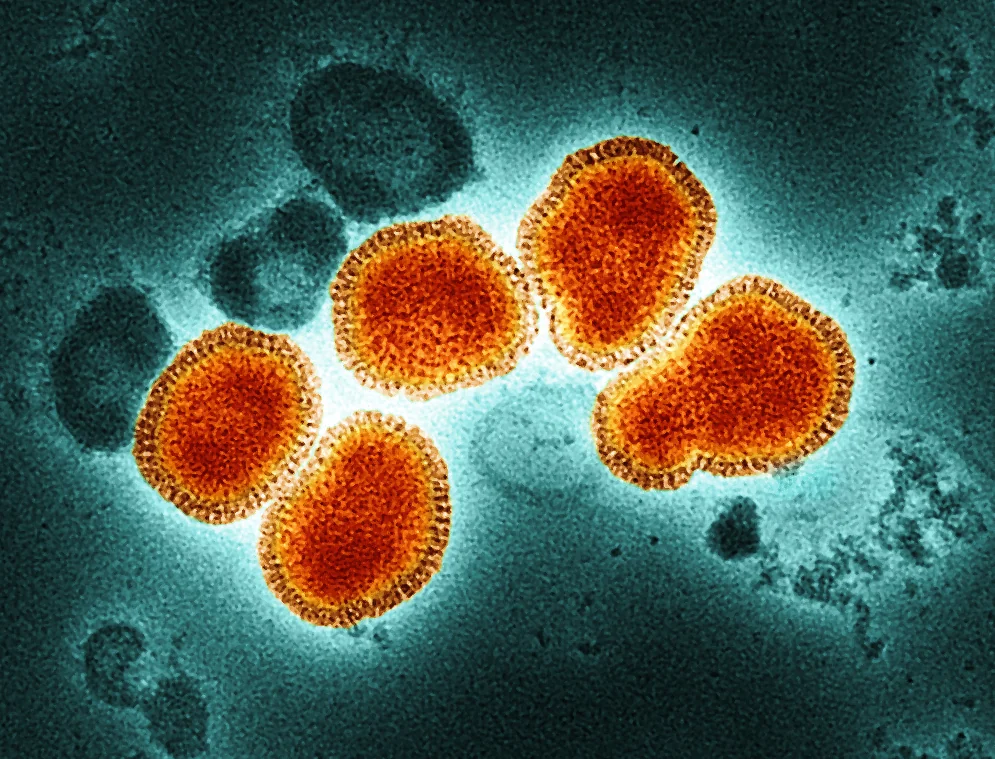
Influenza is an acute respiratory illness caused by influenza virus, an orthomyxovirus. Types A and B cause the seasonal epidemics seen every winter in the UK; type C causes mild, sporadic illness; type D is not known to cause human disease. Influenza A is further subtyped by its two surface glycoproteins - haemagglutinin (H) and neuraminidase (N) - giving the familiar names such as H1N1 and H3N2.
It is common, seasonal, and usually self-limiting, but it causes substantial UK morbidity and mortality every winter, disproportionately in older adults, young children and people with chronic disease. It is examined heavily because it tests two things at once: the clinical skill of separating it from a common cold or COVID-19 on history alone, and an understanding of viral evolution that explains both annual vaccination and pandemic risk.
Virology: drift versus shift
Understanding how influenza changes over time explains both why the vaccine needs reformulating every year and why an entirely new pandemic strain can appear with little warning.
| Antigenic drift | Antigenic shift | |
|---|---|---|
| Mechanism | Gradual accumulation of point mutations in haemagglutinin and neuraminidase | Abrupt reassortment of gene segments when two different influenza A strains co-infect the same host cell (often in a pig or bird) |
| Which types | Influenza A and B | Influenza A only, since only influenza A infects multiple species (humans, birds, pigs) |
| Consequence | Seasonal epidemics; existing immunity gives partial but incomplete protection | Pandemics; the new strain is antigenically novel, so there is little to no pre-existing population immunity |
| Example | The reason the flu vaccine composition is reviewed and updated annually | H1N1 ("swine flu", 2009); avian strains such as H5N1 and H7N9 are watched closely for pandemic potential |
Transmission and epidemiology
Spread is by respiratory droplets and aerosols, and by contact with contaminated surfaces. The incubation period is short, typically 1-4 days, and patients are infectious from around a day before symptoms begin until roughly 5-7 days after onset - longer in young children and the immunosuppressed. UK activity is strongly seasonal, peaking in winter, which is why vaccination is timed for the autumn.
Clinical features
The hallmark is an abrupt onset of systemic symptoms - patients can often say exactly which hour they started feeling unwell, in contrast to the gradual, predominantly nasal onset of a common cold.
- Fever, often high, with chills and rigors
- Myalgia - widespread muscle aching, often prominent enough that patients describe feeling '"hit by a bus"'
- Headache
- Dry cough
- Sore throat and nasal congestion - present, but less dominant than in a common cold
- Profound fatigue and malaise, which can outlast the fever by several days
| Feature | Influenza | Common cold |
|---|---|---|
| Onset | Abrupt, over hours | Gradual, over 1-2 days |
| Fever | Common, often high | Uncommon, or low-grade |
| Myalgia/fatigue | Prominent, often severe | Mild or absent |
| Nasal symptoms | Present but not dominant | The dominant feature |
| Cough | Dry, can be severe | Mild |
At-risk groups
These are the groups both targeted for annual vaccination and prioritised for antiviral treatment, because they carry a substantially higher risk of severe or complicated disease.1
- Adults aged 65 and over
- Pregnant women
- Children under 5, and especially under 2
- Chronic respiratory disease, including asthma and COPD
- Chronic heart disease
- Chronic kidney or liver disease
- Chronic neurological disease
- Diabetes mellitus
- Immunosuppression, including from treatment or from asplenia
- Severe obesity (BMI ≥40)
- Residents of care homes and other long-stay facilities
- Healthcare and social care workers, for both personal and onward-transmission risk
Differential diagnosis
- COVID-19 - overlaps closely with influenza clinically; testing is often needed to tell them apart, and co-circulation means both should be considered together in season
- Common cold (rhinovirus and others) - milder, more gradual, dominated by nasal symptoms
- Community-acquired pneumonia - consider if there are focal chest signs, or if a patient with apparent flu deteriorates rather than improving
- Other respiratory viruses - RSV, parainfluenza, adenovirus, particularly in children
- Streptococcal or other bacterial pharyngitis, if sore throat dominates
Investigations
During a known period of circulating influenza, diagnosis in an otherwise typical, mild presentation is usually clinical, and testing changes management rarely enough that it is not routinely needed.
- PCR (nose/throat swab) - the most sensitive test, used for hospitalised patients, diagnostic uncertainty, or where a positive result would change management (for example, isolation decisions or antiviral prescribing)
- Rapid antigen testing - faster but less sensitive than PCR; a negative result does not exclude influenza
- Chest X-ray - if there are clinical features of pneumonia or the patient is significantly unwell, to look for viral pneumonitis or secondary bacterial pneumonia
- FBC, CRP, U&Es - for anyone unwell enough to need admission, and to help distinguish a viral picture from evolving bacterial superinfection
Management
Supportive care
Most cases in otherwise healthy people are managed at home with rest, fluids, and paracetamol or NSAIDs for fever and myalgia. Antibiotics have no role against the virus itself and are reserved for confirmed or strongly suspected bacterial complications.
Antivirals
Oseltamivir (oral) or zanamivir (inhaled) are neuraminidase inhibitors that can shorten the illness and reduce the risk of complications, but their benefit is time-critical.
Vaccination
Annual vaccination is the mainstay of prevention, offered to all at-risk groups listed above plus healthcare workers, and reformulated each year to match the anticipated circulating strains (informed by WHO surveillance of antigenic drift). An inactivated injectable vaccine is used for adults and at-risk children; a live attenuated nasal spray vaccine is used for healthy children, and is avoided in significant immunosuppression given its live-virus content.
Post-exposure prophylaxis
Antiviral prophylaxis can be offered to at-risk close contacts of a confirmed case during a defined exposure window, particularly in outbreak settings such as care homes, to limit onward spread and protect the most vulnerable.
Complications
- Secondary bacterial pneumonia - the commonest serious complication, typically from Streptococcus pneumoniae, Staphylococcus aureus or Haemophilus influenzae; classically presents as a biphasic illness, with initial improvement followed by renewed fever and deterioration
- Primary viral pneumonitis - less common but can progress rapidly to respiratory failure and ARDS, particularly with novel or severe strains
- Exacerbation of underlying chronic disease - COPD, asthma and heart failure are all commonly destabilised by influenza
- Otitis media, especially in children
- Myocarditis and pericarditis
- Encephalitis and, rarely, Guillain-Barré syndrome
- Reye's syndrome - a rare but severe hepatic and cerebral illness linked to aspirin use in children with a viral illness, which is why aspirin is avoided in children under 16 outside specific indications such as Kawasaki disease
Red flags
Prognosis
Most healthy people recover fully within a week to 10 days, though fatigue and cough can persist longer. Morbidity and mortality are concentrated in the at-risk groups described above, which is why vaccination and prompt antiviral treatment are targeted at them rather than applied universally. A novel pandemic strain, arising through antigenic shift, carries the potential for substantially higher severity and mortality across all age groups, since population immunity is minimal or absent.
References
- NICE Clinical Knowledge Summaries. Influenza - seasonal. Available here
- UK Health Security Agency. Influenza: guidance, data and analysis. Available here
- NICE TA168. Amantadine, oseltamivir and zanamivir for the treatment of influenza. Available here
- World Health Organization. Influenza (seasonal) fact sheet. Available here
- Green Book. Influenza - chapter 19. UK Health Security Agency immunisation guidance. Available here
This article is written for revision and education. It is not clinical guidance and must not be used to make decisions about the care of a patient. Always check current NICE guidance and local protocols.