
Herpes Simplex Virus
Key points
- HSV-1 and HSV-2: both cause oral and genital disease, with increasing overlap - HSV-1 is now a common cause of genital herpes via oral-genital contact.
- Latency: after primary infection, HSV becomes latent in sensory ganglia (trigeminal for orofacial disease, sacral for genital disease) and reactivates periodically, causing recurrent, usually milder, episodes.
- HSV encephalitis: the commonest cause of sporadic viral encephalitis in the UK, with a strong predilection for the temporal lobes - start IV aciclovir empirically on clinical suspicion, without waiting for confirmatory tests.
- Eczema herpeticum: widespread HSV superinfection of atopic dermatitis - a dermatological emergency needing same-day assessment and IV aciclovir.
- Genital herpes: painful vesicular or ulcerative lesions - pain is a key feature distinguishing it from the painless chancre of primary syphilis.
- Neonatal HSV: risk is far higher with primary maternal genital infection near delivery than with recurrent infection, because there has been no time for protective maternal antibody to develop - caesarean section is considered for primary infection in the third trimester.
- Diagnosis: PCR of vesicle fluid or a swab from the base of an ulcer is now preferred over viral culture; serology has limited use in acute diagnosis.
Introduction
Herpes simplex virus exists as two related but distinct types. HSV-1 classically causes orofacial disease (cold sores) and is acquired early in life through non-sexual contact; HSV-2 classically causes genital disease and is acquired sexually. This distinction is increasingly blurred in practice - HSV-1 is now a leading cause of genital herpes, transmitted through oral-genital contact, so genital lesions cannot be assumed to be HSV-2 on clinical grounds alone.
After primary infection, both types establish lifelong latency in sensory ganglia - the trigeminal ganglion for orofacial infection, the sacral ganglia for genital infection - with periodic reactivation causing recurrent, generally milder episodes. The virus is examined heavily both for its common, usually trivial presentations and for a small number of presentations that are genuine emergencies.
Orofacial HSV
- Primary gingivostomatitis - in young children, often the first clinical episode: painful oral ulceration, fever and malaise, sometimes severe enough to cause difficulty eating or drinking
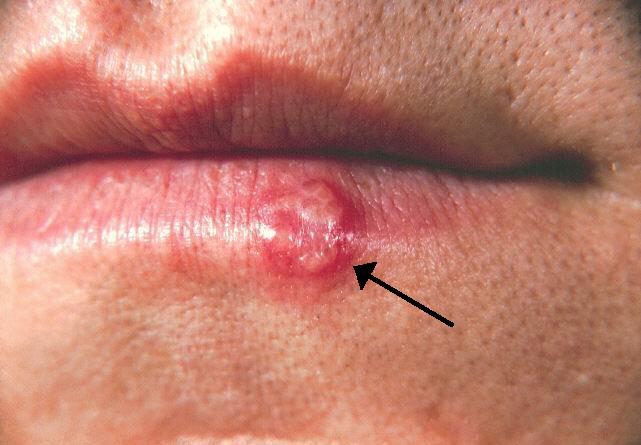
- Herpes labialis (cold sores) - recurrent, usually preceded by a tingling prodrome, with grouped vesicles on an erythematous base at the vermilion border of the lip
- Herpetic whitlow - HSV infection of a finger, classically seen in healthcare workers (via unprotected contact with infected secretions) and in young children who thumb-suck
- Herpes keratitis - corneal infection producing a characteristic dendritic ulcer on fluorescein staining; needs ophthalmology referral, and topical corticosteroids are avoided, since they can worsen the infection and risk corneal scarring and vision loss
Genital HSV
A primary episode is often the most severe: painful vesicular or ulcerative lesions on the genitals, sometimes with fever, malaise, dysuria, tender inguinal lymphadenopathy and, occasionally, urinary retention from pain-related sphincter spasm. Recurrent episodes are usually milder and shorter, often preceded by a localised tingling or burning prodrome.
Management of a primary episode includes oral aciclovir, valaciclovir or famciclovir (typically for 5 days), supportive measures such as saline bathing and topical anaesthetic gel, and analgesia; catheterisation is occasionally needed for significant urinary retention. Patients with frequent recurrences (generally more than 6 per year) may be offered suppressive antiviral therapy. As with any STI diagnosis, referral to a sexual health clinic for full STI screening, partner notification and safer sex counselling is routine.
HSV in pregnancy and the neonate
The risk to the neonate depends heavily on whether maternal infection is primary or recurrent, and on its timing relative to delivery.
- Primary genital HSV in the third trimester, particularly within about 6 weeks of delivery, carries the highest risk of neonatal transmission, because there has not been time for protective maternal IgG to develop and cross the placenta - caesarean section is generally recommended in this scenario
- Primary infection earlier in pregnancy allows time for maternal antibody to develop; suppressive aciclovir is typically started from around 36 weeks, and vaginal delivery is usually appropriate
- Recurrent genital HSV in pregnancy carries a much lower transmission risk, since the mother already has protective antibody; suppressive aciclovir from around 36 weeks reduces the chance of an active lesion at the time of labour, and vaginal delivery is generally appropriate unless lesions are present at the onset of labour
Neonatal HSV can present as localised skin, eye and mouth (SEM) disease, CNS disease, or disseminated multi-organ disease - the most severe form, with substantial mortality even with treatment. Exposed or infected neonates are managed with IV aciclovir and close specialist input.
Eczema herpeticum
A widespread HSV superinfection occurring on a background of atopic dermatitis (or other disrupted skin barrier), producing monomorphic punched-out erosions and vesicles, often with fever and malaise, and a real risk of secondary bacterial infection and dissemination.
HSV encephalitis
HSV is the commonest cause of sporadic (non-epidemic) viral encephalitis in the UK, with a striking predilection for the temporal lobes. It presents with fever, headache, altered consciousness or personality change, seizures and focal neurological deficits, evolving over hours to days.
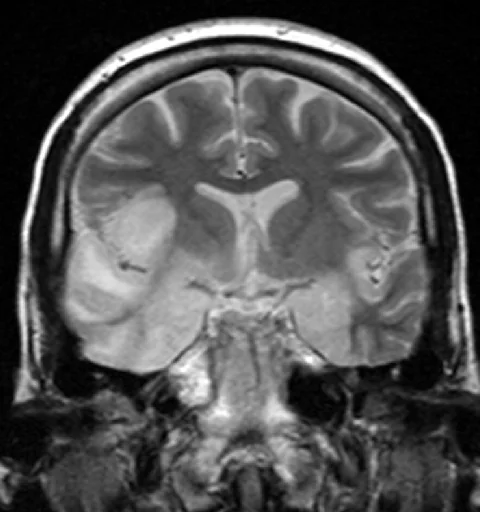
MRI typically shows asymmetric signal change in the temporal lobes and insula; EEG may show characteristic periodic lateralised discharges over the affected temporal lobe. CSF typically shows a lymphocytic pleocytosis with a raised protein, and sometimes red cells reflecting the haemorrhagic necrotising nature of the infection.
Differential diagnosis
- Aphthous ulcers - recurrent oral ulceration without the grouped vesicular pattern or systemic upset of primary gingivostomatitis
- Hand, foot and mouth disease (coxsackievirus) - a different distribution and typically a milder course
- Primary syphilis - a painless genital chancre, versus the painful ulceration of HSV
- Chancroid - painful genital ulceration from Haemophilus ducreyi, rare in the UK but part of the differential in a relevant travel or exposure context
- Other causes of encephalitis - autoimmune/paraneoplastic encephalitis, other viral causes (VZV, enteroviruses) and, where relevant, bacterial meningoencephalitis
Investigations
- PCR from vesicle fluid or an ulcer base swab - the preferred diagnostic test, more sensitive than viral culture and now the standard approach
- Type-specific serology (IgG) - has limited value in acute diagnosis, but can help clarify past exposure or type (HSV-1 versus HSV-2) in specific clinical circumstances
- CSF HSV PCR, MRI brain and EEG - for suspected encephalitis, as above, though treatment should never be delayed to obtain these
Red flags
Prognosis
Recurrent orofacial and genital HSV are lifelong but generally manageable conditions, with recurrences often becoming less frequent and less severe over time. The presentations that carry serious risk - HSV encephalitis, eczema herpeticum, disseminated neonatal disease - all have outcomes that depend heavily on how quickly treatment is started, which is the recurring theme across this virus's more dangerous manifestations: HSV disease that stays confined to skin or mucosa is a nuisance, but HSV disease that reaches the brain, a disrupted skin barrier at scale, or a neonate is a genuine emergency.
References
- NICE Clinical Knowledge Summaries. Herpes simplex - oral. Available here
- NICE Clinical Knowledge Summaries. Herpes simplex - genital. Available here
- British Association for Sexual Health and HIV (BASHH). UK national guideline for the management of genital herpes. Available here
- Royal College of Obstetricians and Gynaecologists. Genital herpes in pregnancy. Available here
- Whitley RJ, Gnann JW. Herpes simplex encephalitis: children and adolescents. Seminars in Pediatric Infectious Diseases. 2002. Available here
This article is written for revision and education. It is not clinical guidance and must not be used to make decisions about the care of a patient. Always check current NICE guidance and local protocols.