
Preterm Labour
Key points
- Definition: birth before 37+0 weeks; extremely preterm is before 28 weeks, very preterm 28-31+6, moderate 32-33+6 and late preterm 34-36+6.
- Frequency: around 8% of UK births, and the leading cause of neonatal death and of long-term neurodevelopmental disability.
- Strongest risk factor: a previous spontaneous preterm birth or mid-trimester loss.
- Prediction: transvaginal cervical length of 25 mm or less before 24 weeks, and quantitative fetal fibronectin between 22+0 and 34+6 weeks.
- Prevention: vaginal progesterone or cervical cerclage for women with a short cervix and a history of preterm birth or cervical surgery.
- Corticosteroids: betamethasone 12 mg intramuscularly, two doses 24 hours apart, offered from 24+0 to 33+6 weeks.
- Magnesium sulfate: given for fetal neuroprotection from 24+0 to 29+6 weeks, and considered to 33+6, reducing cerebral palsy.
- Tocolysis: nifedipine first line, to buy 48 hours for steroids and in-utero transfer rather than to prolong the pregnancy.
Introduction
Preterm birth is birth before 37+0 weeks of gestation. It complicates around 8% of UK pregnancies and accounts for the majority of neonatal deaths and a large share of long-term neurodevelopmental disability. Because outcome improves steeply with each additional week of gestation at the extremes, small delays in delivery translate into large differences in survival and morbidity.1
It has three routes. Roughly 40-45% follow spontaneous preterm labour with intact membranes, 25-30% follow preterm prelabour rupture of membranes, and 30% are iatrogenic, where birth is deliberately expedited for maternal or fetal reasons such as pre-eclampsia or growth restriction. The first two share underlying mechanisms and are the subject of this article.
The practical framework has three parts: identify women at risk and intervene before labour starts; diagnose established preterm labour accurately so that treatment is given to those who need it and withheld from those who do not; and when birth is inevitable, use the interventions that improve neonatal outcome rather than those that merely delay the birth.
Causes and risk factors
Spontaneous preterm labour is a syndrome rather than a single disease. Several distinct pathways converge on the same final common outcome of cervical ripening, membrane weakening and uterine activation.
| Pathway | Mechanism |
|---|---|
| Infection and inflammation | Ascending genital tract infection releases cytokines and prostaglandins that ripen the cervix, weaken the membranes and stimulate contractions; the commonest identified cause of very preterm birth |
| Cervical insufficiency | Structural or functional weakness of the cervix, often after excisional treatment for cervical intraepithelial neoplasia, causing painless dilatation |
| Uterine overdistension | Multiple pregnancy and polyhydramnios stretch the myometrium, upregulating contraction-associated proteins |
| Decidual haemorrhage | Abruption generates thrombin, which is a potent uterotonic and degrades the membranes |
| Maternal or fetal stress | Activation of the hypothalamic-pituitary-adrenal axis raises placental corticotrophin-releasing hormone |
| Uterine anomaly | Septate, bicornuate or unicornuate uterus, and fibroids distorting the cavity |
- Previous spontaneous preterm birth or mid-trimester loss - the single strongest predictor, with recurrence risk rising as the index gestation falls
- Previous cervical surgery - large loop excision of the transformation zone, cone biopsy, repeated dilatation
- Multiple pregnancy - around 60% of twins deliver before 37 weeks
- Short cervix on transvaginal ultrasound
- Infection - bacterial vaginosis, urinary tract infection, sexually transmitted infection, periodontal disease
- Smoking, cocaine use, low BMI and a short interpregnancy interval
- Antepartum haemorrhage, polyhydramnios, and uterine anomaly
- Social factors - deprivation, young or advanced maternal age, and, in UK data, Black and South Asian ethnicity
Prediction and prevention
Women identified as at risk are managed in a dedicated preterm birth clinic, where surveillance and prophylaxis are offered according to their history and cervical findings.
Cervical length surveillance
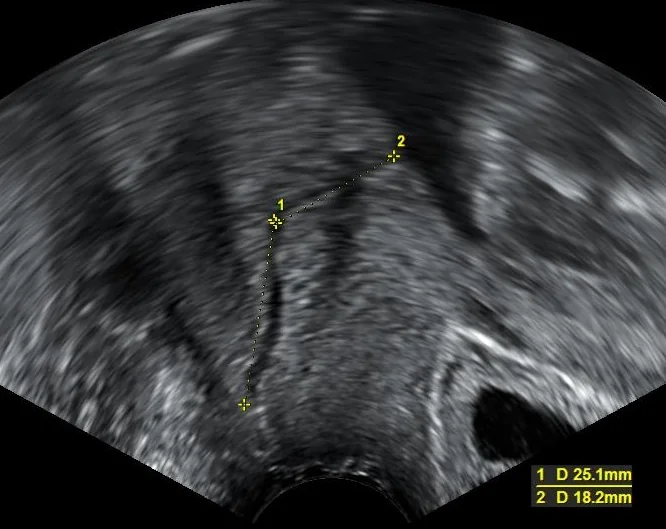
Transvaginal ultrasound measurement of cervical length is offered from 16 weeks, repeated every 2-4 weeks until around 24 weeks, in women with a history of spontaneous preterm birth, mid-trimester loss or cervical surgery. A cervical length of 25 mm or less before 24 weeks identifies substantially increased risk; the shorter the cervix, the higher the risk. Funnelling of the internal os is a supportive but less reproducible finding.
Fetal fibronectin
Fetal fibronectin is a glycoprotein at the choriodecidual interface. It is normally present in cervicovaginal secretions before 22 weeks and after 35 weeks, but its appearance between those times suggests disruption of that interface. Quantitative fetal fibronectin testing between 22+0 and 34+6 weeks is used chiefly for its negative predictive value: a result below 50 ng/mL makes birth within the next two weeks very unlikely, which allows most women presenting with symptoms to be reassured and sent home. Recent intercourse, vaginal bleeding, digital examination and lubricant all cause false positives, so the swab is taken before any other vaginal procedure.1
Progesterone
Vaginal progesterone 200 mg daily, given from 16-24 weeks until 34 weeks, reduces preterm birth in women with a short cervix. NICE recommends offering it to women with both a previous spontaneous preterm birth or mid-trimester loss and a cervical length of 25 mm or less, and considering it where only one of those is present. It appears to act by maintaining uterine quiescence and cervical integrity.1
Cervical cerclage
| Type | Indication | Timing |
|---|---|---|
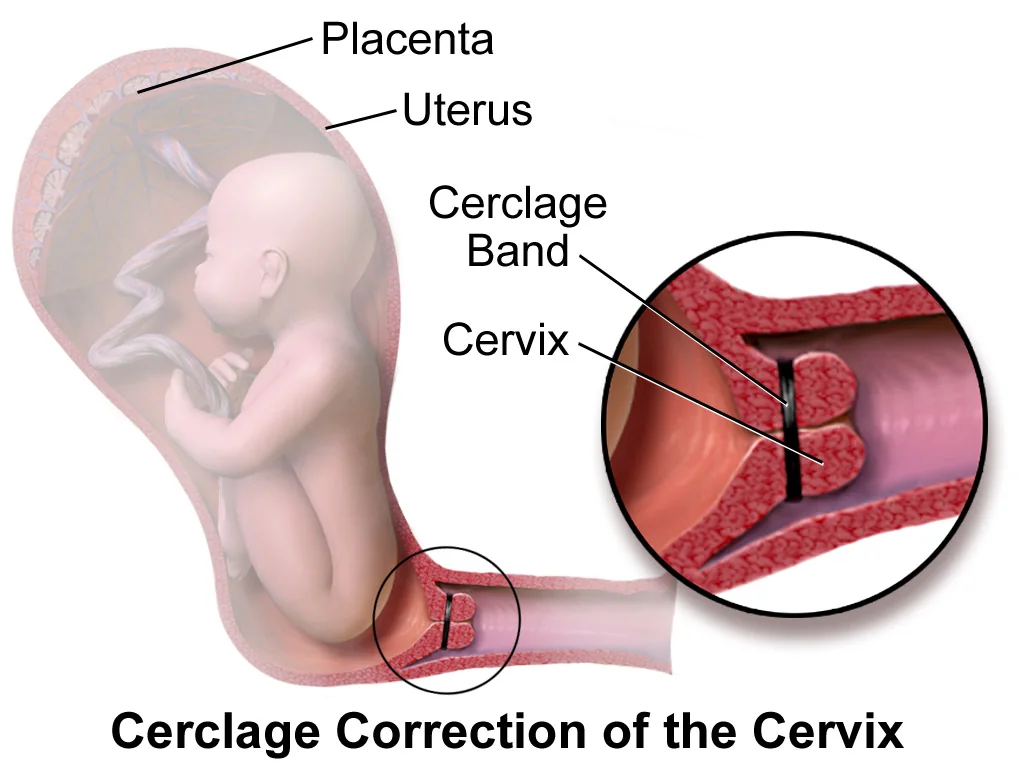
| History-indicated | Three or more previous preterm births or mid-trimester losses | Elective, usually at 12-14 weeks |
| Ultrasound-indicated | Cervical length 25 mm or less before 24 weeks with a previous preterm birth, mid-trimester loss or cervical trauma | When the short cervix is detected |
| Rescue (emergency) | Cervical dilatation with exposed unruptured membranes, between 16+0 and 27+6 weeks | At presentation, after excluding infection, bleeding and contractions |
Cerclage is contraindicated in the presence of active bleeding, established labour, chorioamnionitis or ruptured membranes. The suture is removed at around 36-37 weeks, or earlier if labour starts, since leaving it in place during labour risks cervical laceration.2
Diagnosing preterm labour
Diagnosis matters because the majority of women presenting with threatened preterm labour will not deliver preterm, and treating all of them means unnecessary admission, unnecessary steroids and unnecessary in-utero transfer away from home.
- Symptoms: regular painful contractions, pelvic pressure, low backache, increased or bloody vaginal discharge
- Full observations and maternal early warning score, looking for signs of sepsis
- Abdominal palpation for uterine tenderness, contractions, fundal height and presentation
- Sterile speculum examination to visualise the cervix and look for pooling of liquor
- Avoid a digital vaginal examination if preterm prelabour rupture of membranes is suspected, because it introduces infection
- Cardiotocography or auscultation, depending on gestation
- Swabs, midstream urine and inflammatory markers where infection is suspected
| Gestation | Approach |
|---|---|
| Under 30 weeks | A clinical diagnosis is sufficient; treat as preterm labour without further testing, because the consequences of being wrong are severe |
| 30 weeks or more | Offer transvaginal cervical length measurement or quantitative fetal fibronectin; a cervical length above 15 mm or fibronectin below 50 ng/mL makes preterm labour unlikely and allows discharge |
Where preterm prelabour rupture of membranes is suspected but pooling is not seen on speculum, insulin-like growth factor binding protein-1 or placental alpha-microglobulin-1 testing of vaginal fluid can be used. Ultrasound showing oligohydramnios supports the diagnosis but does not confirm it.1
Management of established preterm labour
Antenatal corticosteroids
A single course of betamethasone 12 mg intramuscularly, repeated once after 24 hours, is the single most effective intervention in preterm birth. It accelerates type II pneumocyte maturation and surfactant production, and also matures the gut and cerebral vasculature. It reduces neonatal death, respiratory distress syndrome, intraventricular haemorrhage and necrotising enterocolitis.
- Offer between 24+0 and 33+6 weeks where preterm birth is suspected, diagnosed or planned within 7 days
- Consider between 22+0 and 23+6 weeks where active neonatal care is planned, and between 34+0 and 35+6 weeks
- Maximum benefit occurs between 24 hours and 7 days after the first dose, but some benefit accrues even a few hours after a single dose, so give it even if birth appears imminent
- A single repeat course may be considered if the first was given some weeks earlier and birth now appears imminent; repeated courses reduce fetal growth
- Corticosteroids raise maternal blood glucose substantially, so women with diabetes need additional insulin and close monitoring
Magnesium sulfate for neuroprotection
Intravenous magnesium sulfate given to the mother before very preterm birth reduces the risk of cerebral palsy and gross motor dysfunction in the child. It is offered between 24+0 and 29+6 weeks where birth is expected within 24 hours, and considered between 30+0 and 33+6 weeks. The regimen is a 4 g intravenous loading dose over 15 minutes followed by 1 g per hour until birth or for 24 hours, whichever is sooner, with monitoring of respiratory rate, reflexes, blood pressure and urine output for toxicity.1,3
Tocolysis
Antibiotics
- Preterm prelabour rupture of membranes: erythromycin 250 mg four times daily for 10 days or until labour, which prolongs pregnancy and reduces neonatal infection
- Do not use co-amoxiclav in this setting; the ORACLE I trial found an association with neonatal necrotising enterocolitis
- Preterm labour with intact membranes: do not give prophylactic antibiotics; ORACLE II found no benefit, and follow-up at 7 years showed an increase in functional impairment and cerebral palsy in children exposed to antibiotics
- Group B streptococcal prophylaxis in labour is indicated for all women in established preterm labour: benzylpenicillin 3 g intravenously then 1.5 g four-hourly until delivery
Place and mode of birth
- Arrange in-utero transfer to a unit with a neonatal service appropriate for the gestation; the outcome for a baby born in the right unit is better than for one transferred after birth
- Involve the neonatal team antenatally and ensure the parents have spoken to them
- Continuous fetal monitoring is generally used from around 26 weeks; below that the value of cardiotocography is limited and management is individualised
- Caesarean section is not routinely indicated by prematurity alone; the mode of birth follows presentation, fetal condition and gestation
- Defer cord clamping for at least 30-60 seconds where the baby's condition allows, which reduces intraventricular haemorrhage and the need for transfusion
- Use a plastic bag and radiant heat immediately after birth without drying, to prevent hypothermia in babies under 30 weeks
Preterm prelabour rupture of membranes
PPROM complicates around 2% of pregnancies and precedes about a third of preterm births. Once the membranes have ruptured, around half of women will labour within 48 hours and most within a week, but a proportion remain undelivered for weeks, and management is a balance between the risks of prematurity and those of ascending infection.
- Confirm the diagnosis on sterile speculum examination; avoid digital examination
- Erythromycin for 10 days or until established labour
- Antenatal corticosteroids according to gestation
- Monitor for chorioamnionitis: maternal temperature and pulse, fetal heart rate, uterine tenderness and the character of the liquor; CRP and white cell count are supportive but unreliable in isolation
- Advise the woman to report any fever, offensive discharge, abdominal pain or reduced fetal movements immediately
- Where there is no infection and the fetal condition is reassuring, expectant management is offered until 37+0 weeks, after which birth is advised
- Deliver at any gestation if chorioamnionitis develops, alongside intravenous antibiotics
The additional risks of PPROM at very early gestations are pulmonary hypoplasia and limb contractures from prolonged oligohydramnios, cord prolapse, and placental abruption. Where membranes rupture before around 22 weeks, the prognosis is substantially worse and counselling should be realistic and involve fetal medicine and neonatology.1
Neonatal outcomes
| Gestation | Approximate survival of live births admitted for care | Dominant concerns |
|---|---|---|
| 22-23 weeks | Around 20-40%, with high rates of severe impairment in survivors | Extreme immaturity; care decisions made jointly with parents using the BAPM framework |
| 24-25 weeks | Around 60-70% | Respiratory distress, intraventricular haemorrhage, sepsis, necrotising enterocolitis |
| 26-27 weeks | Around 80-90% | Bronchopulmonary dysplasia, retinopathy of prematurity |
| 28-31 weeks | Above 90% | Respiratory support, feeding, jaundice, temperature control |
| 32-36 weeks | Above 98% | Feeding difficulty, jaundice, hypoglycaemia, transient tachypnoea |
- Respiratory: respiratory distress syndrome, apnoea of prematurity, bronchopulmonary dysplasia
- Neurological: intraventricular haemorrhage, periventricular leukomalacia, cerebral palsy, learning difficulty
- Gastrointestinal: necrotising enterocolitis, feed intolerance, poor growth
- Cardiovascular: patent ductus arteriosus, hypotension
- Infective: early- and late-onset sepsis
- Sensory: retinopathy of prematurity, sensorineural hearing loss
- Metabolic: hypothermia, hypoglycaemia, jaundice, electrolyte disturbance
Red flags
After a preterm birth
A woman who has had a spontaneous preterm birth should be seen postnatally to review what happened, arrange placental histology results, and plan the next pregnancy. Her recurrence risk is substantially increased and falls with the gestation of the index birth, so she should be booked early and referred directly to a preterm birth clinic rather than through the routine pathway.
In the next pregnancy she is offered cervical length surveillance from 16 weeks, vaginal progesterone or cerclage according to findings, smoking cessation support, and a documented plan for what to do if symptoms recur. Interpregnancy interval, treatment of infection and nutritional optimisation are all worth addressing before conception rather than after.1,2
References
- NICE NG25. Preterm labour and birth. 2015 (updated 2022). Available here
- RCOG Green-top Guideline No. 75. Cervical cerclage. Available here
- Doyle LW, Crowther CA, Middleton P et al. Magnesium sulphate for women at risk of preterm birth for neuroprotection of the fetus. Cochrane Database of Systematic Reviews. Available here
- RCOG Green-top Guideline No. 1B. Tocolysis for women in preterm labour. Available here
- British Association of Perinatal Medicine. Perinatal management of extreme preterm birth before 27 weeks of gestation. Available here
This article is written for revision and education. It is not clinical guidance and must not be used to make decisions about the care of a patient. Always check current NICE guidance and local protocols.