
Human Papillomavirus and Genital Warts
Key points
- Organism: human papillomavirus (HPV), a DNA virus with over 100 genotypes infecting skin and mucosa.
- Low-risk types: HPV 6 and 11 cause over 90% of genital warts; they are not oncogenic.
- High-risk types: HPV 16 and 18 are responsible for the majority of cervical cancers and a proportion of anal, penile, vulval, vaginal and oropharyngeal cancers.
- Presentation of warts: painless, flesh-coloured or pigmented papules, single or multiple, anywhere in the anogenital region.
- Diagnosis: clinical - warts are diagnosed by inspection, not by HPV testing.
- Management: topical podophyllotoxin or imiquimod, or ablative treatments (cryotherapy, excision); many resolve spontaneously.
- Vaccination: the UK national programme uses a vaccine covering HPV 6, 11, 16 and 18 (or more types), offered to adolescents of all sexes before likely exposure.
- Cervical screening: now primarily HPV-based, testing for high-risk types before cytology, since HPV is the causative agent, not just a risk marker.
Introduction
Human papillomavirus (HPV) is a very common sexually transmitted DNA virus with more than 100 identified genotypes, broadly divided into low-risk and high-risk types on the basis of their oncogenic potential.1 Low-risk types, principally HPV 6 and 11, cause the great majority of anogenital warts, a benign but often distressing and recurrent condition. High-risk types, principally HPV 16 and 18, are the necessary cause of virtually all cervical cancer and a substantial proportion of anal, vulval, vaginal, penile and oropharyngeal cancers.2
Most sexually active people acquire HPV infection at some point, and the majority of infections - including with high-risk types - clear spontaneously within one to two years through cell-mediated immunity. Disease results from persistent infection, which is why both vaccination (preventing acquisition) and cervical screening (detecting persistent high-risk infection before cancer develops) are central to UK public health strategy.
Transmission and pathophysiology
HPV is transmitted by direct skin-to-skin or mucosal contact, most commonly during vaginal, anal or oral sex, but genital-to-genital contact without penetration can also transmit infection, which is why condoms reduce but do not eliminate transmission risk. Vertical transmission can rarely cause laryngeal papillomatosis in infants.
The virus infects basal keratinocytes through minor breaks in the epithelium. Low-risk types cause benign hyperproliferation of the epithelium, producing the visible wart. High-risk types can integrate viral oncogenes E6 and E7 into the host genome, which inactivate the tumour suppressor proteins p53 and retinoblastoma protein respectively; persistent expression of these oncogenes over years is what drives the stepwise progression from dysplasia to invasive cancer.1
Genital warts: clinical features
The incubation period from exposure to visible warts is typically weeks to several months, and can be considerably longer, which makes pinpointing the source partner unreliable and an important point to explain to patients who feel they must identify who transmitted the infection to them.
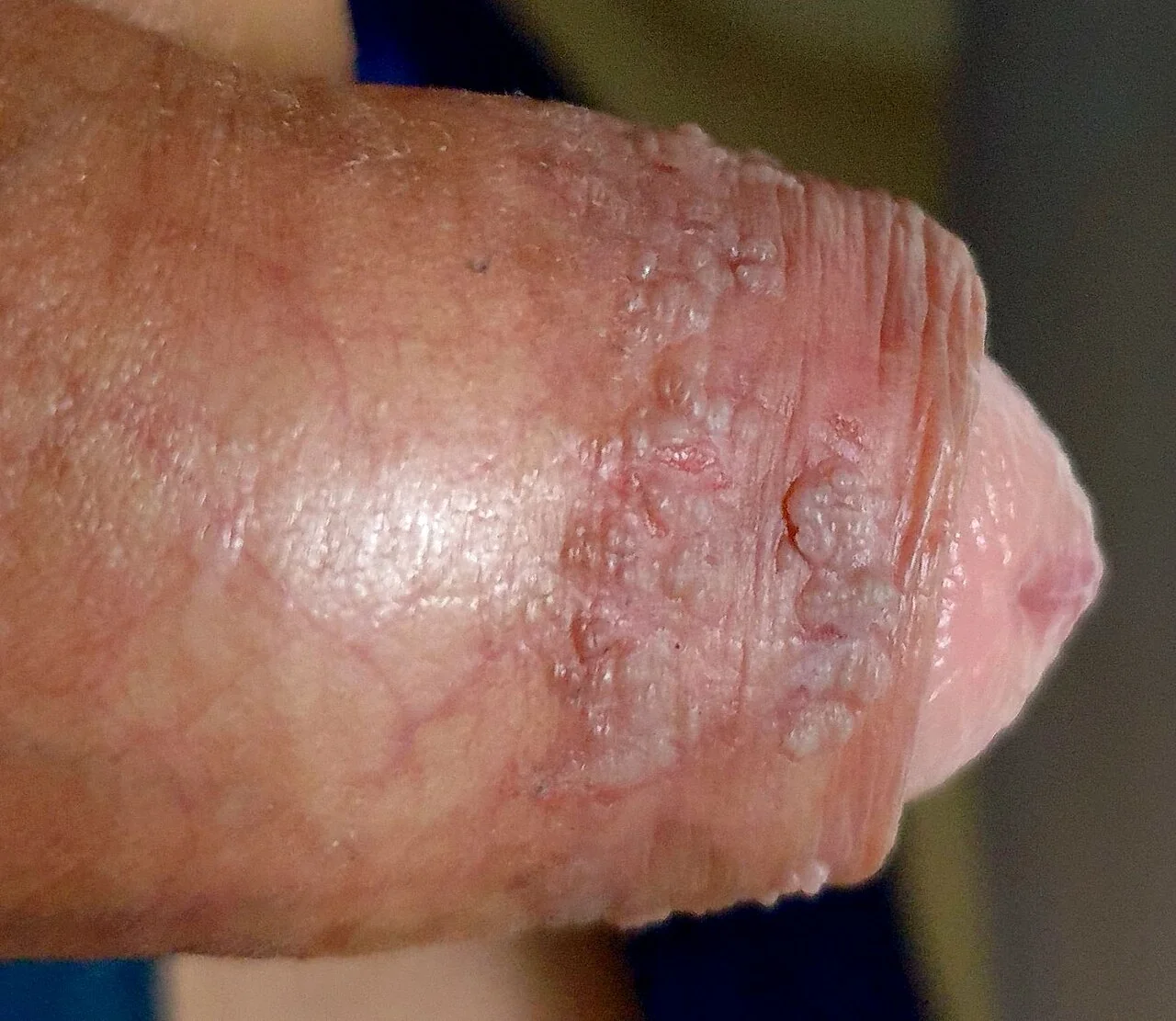
Warts (condylomata acuminata) present as painless papules, ranging from small and flat to larger, cauliflower-like exophytic lesions, which may be flesh-coloured, pink, grey or hyperpigmented. They occur anywhere in the anogenital region consistent with sexual contact - the vulva, vagina, cervix, penis, scrotum, perianal skin and anal canal - and are usually asymptomatic, though larger lesions can cause itching, bleeding or mechanical discomfort.3
Differential diagnosis
- Molluscum contagiosum: discrete, dome-shaped papules with central umbilication
- Condylomata lata: the broad, flat, highly infectious plaques of secondary syphilis
- Skin tags or pearly penile papules: normal anatomical variants, not caused by HPV
- Seborrhoeic keratosis: more common in older patients, unrelated to sexual contact
- Squamous cell carcinoma or vulval/penile intraepithelial neoplasia: should be considered for any atypical, ulcerating, fixed or rapidly growing lesion
Investigations
Genital warts are a clinical diagnosis made on inspection; HPV typing or testing is not used to diagnose warts and has no role in their management.3 Biopsy is reserved for atypical lesions - pigmented, indurated, fixed, ulcerated, or not responding to treatment - to exclude intraepithelial neoplasia or malignancy.
As with other STIs, a diagnosis of genital warts should prompt a full sexual history and screen for other infections, and women should be reminded that cervical screening follows the standard national programme regardless of a wart diagnosis, since warts are caused by low-risk types and screening targets high-risk types.
Management of genital warts
Treatment choice depends on the number, size, site and morphology of warts, and patient preference, since all available treatments have significant recurrence rates and none eradicates the underlying viral infection.3 A proportion of warts resolve spontaneously without any treatment as cell-mediated immunity clears the infection.
Topical patient-applied treatments are first-line for most external warts: podophyllotoxin (an antimitotic agent, applied in cycles, contraindicated in pregnancy) and imiquimod (an immune response modifier applied less frequently, also not used in pregnancy).
Ablative/clinician-delivered treatments include cryotherapy with liquid nitrogen, electrocautery, excision or laser ablation, generally reserved for keratinised, larger, or treatment-resistant warts, and for internal (vaginal, urethral meatal, or anal) warts unsuitable for topical agents.
High-risk HPV and malignancy
Persistent infection with high-risk HPV types, above all HPV 16 and 18, is the necessary cause of essentially all cervical cancer, and contributes to a substantial proportion of vulval, vaginal, anal, penile and oropharyngeal squamous cell cancers.2 The interval between infection and invasive cancer is typically years to decades, passing through recognisable precursor stages (cervical intraepithelial neoplasia and its equivalents at other sites), which is what makes screening effective.
The NHS Cervical Screening Programme now uses HPV testing as the primary screening test: a sample is first tested for high-risk HPV, and only HPV-positive samples go on to cytological examination for dysplastic changes, reflecting the understanding that HPV is the causative agent rather than merely a correlate of risk.
HPV vaccination
The UK national HPV immunisation programme offers vaccination to all adolescents (all sexes) in school year 8, before likely sexual debut and HPV exposure, using a vaccine that protects against HPV 6 and 11 (preventing the great majority of genital warts) and high-risk types including 16 and 18 (preventing the associated cancers).4 Vaccination is also offered to men who have sex with men up to age 45 attending sexual health and HIV clinics, given their historically lower coverage from the school programme and higher risk of HPV-related anal disease.
Vaccination does not treat existing infection or established warts, and vaccinated individuals still require cervical screening as per the national programme, since the vaccine does not cover every oncogenic HPV type.
Red flags
Prognosis
Most HPV infections, including those causing warts, are cleared by the immune system within one to two years, and treated or untreated warts often resolve, though recurrence during that period is common regardless of treatment modality. The long-term prognosis for HPV-related disease has been transformed by vaccination and organised screening: high coverage of adolescent vaccination is expected to substantially reduce both genital wart incidence and HPV-related cancers over coming decades.
References
- BASHH. UK national guideline on the management of anogenital warts. 2015. Available here
- World Health Organization. Human papillomavirus (HPV) and cervical cancer fact sheet. Available here
- NICE Clinical Knowledge Summaries (CKS). Warts and verrucae - anogenital. Available here
- UK Health Security Agency. HPV vaccination programme guidance. Available here
This article is written for revision and education. It is not clinical guidance and must not be used to make decisions about the care of a patient. Always check current NICE guidance and local protocols.